Showing posts with label disability. Show all posts

Wednesday, May 29, 2019

Joint Participation in Improving your Health and Relationships


Below is another great post from Richard Wright. Its focus is on senior citizens and their caregivers using mindfulness meditation and yoga to improve their mental and physical health while participating in an activity they are both involved in. 

I have practiced mindfulness meditation for several years now. Every day, after my morning exercises and stretches, I will meditate. I’ll often meditate again in the early afternoon. Stretching, along with daily exercise is beneficial for all of us living with Kennedy’s Disease (SBMA). 

Many senior centers and YMCAs offer programs in stretching, yoga, and mindfulness meditation. For the self-starters, Richard has included links to sources on the internet that offer podcasts on these topics. 

Let me reemphasize the important side benefit of “participating together.” Living with any debilitating disorder is difficult for the individual as well as the caregiver. It can also be a rewarding experience, especially when activities are done together. Thank you, Richard.


This Is How Yoga and Meditation Can Transform the Lives of Seniors (And Their Caregivers)

Without proper stimulation and health-boosting activities, the lives of seniors and their caregivers can quickly become monotonous. There’s nothing wrong with having a routine, but it should include activities to get your blood flowing, improve strength, expand your mind, and relieve stress. You might be wondering how you’ll have time to achieve all those goals, but the good news is that yoga and meditation provide all of those things and more. In addition, they are activities the two of you can enjoy together or alone, which can help foster a healthy bond.


Yoga Offers Senior-Specific Benefits

When done safely and properly, yoga provides many wonderful benefits for seniors and caregivers alike. For starters, it can help strengthen bones to minimize, prevent, or slow the progression of osteoporosis, as well as keep your weight in check to prevent it from interfering with your mobility and desire for a more active lifestyle. Yoga is a low-impact exercise with a focus on slow, fluid movements, which can help seniors build strength and balance.


There are benefits for the mind, as well. Most styles of yoga include focused breathing and meditation, which can help seniors and caregivers keep their mind clear and sharp. Additionally, this practice can spike the brain's production of GABA, the chemical that keeps you calm and relaxed. Yoga requires instruction and guidance to keep you safe, so classes at your local yoga studio are the best place to start. However, if you’re looking to get a group of seniors together with a shared interest in yoga, try a senior meetup group.

Meditation Can Stave Off Loneliness

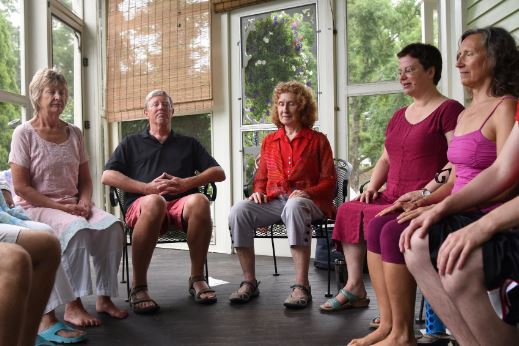
Just like wrinkles and gray hair come with age, loneliness is common in seniors. Perhaps loved ones have passed away or children, family members, and friends no longer live close by. Loneliness has other impacts too. According to Psych Central, “loneliness is known to activate inflammatory genes which, in turn, are known to promote a variety of diseases” However, the study found that mindfulness meditation reduced feelings of loneliness in seniors via regular class attendance, and even reduced the genes that are markers for heart disease and inflammation. Meditation is an integral part of yoga, but it can be practiced on its own as well. There are several beginner podcasts online that will walk you through a meditation session.

Commit to the Practice

Yoga and meditation require dedication and consistent practice. There will be some days when getting to a class isn’t possible, or perhaps you’d just like to be able to practice at home once you learn the proper technique. To achieve this, you’ll need to clear out a room to give you enough space to safely and comfortably practice. It is best to create a dedicatedspace, as you’ll likely grow tired of having to move around furniture and items every time you want to practice. If need be, move some of your belongings into storage to free up space. Incorporate soothing sounds, scents, colors, and lighting for a truly zen experience.

Safety Comes First

Whether you are practicing yoga, meditation, or both, safety should always be your top priority. Yoga is appropriate for all ages, but seniors will benefit from gentle classes such as Iyengar, Viniyoga, and Kripalu. Most yoga studios offer gentle/beginner classes and can help you adapt the poses using chairs and props. As the caregiver, it is your job to communicate with the instructor about the needs and abilities of your senior loved one. This includes disclosing physical and mental ailments, as well as their mood for the day.

Life can be difficult at times for both seniors and caregivers. For this very reason, self-care is crucial. Yoga and meditation combine physical and mental health benefits for a relaxing activity the two of you can explore together.
Photo Credits:

Friday, November 23, 2018

Information Links for Seniors and the Disabled

I received the following email from Richard Wright. I appreciate that he took the time to send these links to me. I hope you find some of these resources informative and useful. Thanks, Richard.

"Since you have so much great info on it [LWKD blog] for individuals who are senior citizens and/or have a disability, I thought you may like to update it with a few additional life- and financial-planning resources I found in my research. They cover a variety of topics, from healthcare and insurance, to home modifications, to canine assistance, and based on the information you’ve already shared on your site, I think they’ll be extremely helpful to your readers.


Here they are:


I hope you can find a way to use these! I’ve also been working on a project where I write articles about how people can create a plan for paying for any future long-term care needs that may arise. If you think an article on that topic would be relevant for your blog, I’d be happy to write a piece for you as well."

Sunday, April 15, 2018

Healthcare Regulations are in Flux


It is s mess out there!


The health insurance industry in the United States is in turmoil. The right hand does not know what the left is doing and no one seems to know what will be the final result.

In the meantime, there are all kinds of scams taking place where someone is trying to sell you something at ridiculously low premiums or way overpriced policies. I am amazed at the number of phone calls we receive every week. I have stopped answering the phone unless I know who is calling. I heard so many ‘sales pitches’ it wore me out. "If you buy this plan within the next four hours, I can reduce the monthly premium by a hundred bucks." "You need to lock in a plan today because I heard premiums will rise 25% tomorrow." I am at a point now where I do not trust anyone calling about health insurance.

Healthcare requirements have still not been finalized by the government and the states. This leaves the shoppers at the mercy of the marketplace. The only thing for sure is that everything will continue to change over the next year or two. I blame the politicians. They have their own healthcare program that is funded by the taxpayers, so they do not understand the mess they have created for the average citizen.

NORD, the National Organization for Rare Disorders, has updated their website to provide the most current state contact information for health insurance and government insurance agencies. This resource will list information for each state and will be updated as new information is made available.

If you, or someone you know, is in the market for health insurance, please follow this link to the NORD website: State-by-State Insurance Information


Monday, March 13, 2017

The only real disability in life is a poor attitude

Living with Kennedy's Disease, or any progressive disorder, is challenging. It is also a learning experience. It is easy to become caught up in the 'feeling sorry for yourself" mode. But, all that does is make life for you and your loved ones miserable.


Many years ago I came across this poem, "The Man in the Glass," by Peter Dale Wimbrow, Sr.

When you get what you want in your struggle for self
and the world makes you king for a day.
Just go to the mirror and look at yourself
and see what that man has to say.

For it isn't your father, mother or wife
whose judgement upon you must pass.
The fellow whose verdict counts in your life
is the one staring back from the glass.

He’s the fellow to please, never mind all the rest,
For he’s with you clear to the end,
And you’ve passed your most  difficult test,
If the man in the glass is your friend.

You can fool the whole world down the pathway of years,
And get pats on the back as you pass,
But the final reward will be heartache and tears,
If you’ve cheated the man in the glass.

The point of this journey is the journey itself. It can only be successful if you live in a way that allows you to enjoy the life you are given.

Thursday, November 3, 2016

Critical Illness and Long Term Disability

October 3rd I reported about Royal London Insurance adding Kennedy's Disease to their list of Critical Illness Coverage. I felt this was an important step and hoped other companies would follow in their footsteps.

This afternoon I read a nicely written piece on Royal London's goal of improving and simplifying the definitions of critical illnesses. Once again I applaud their efforts to improve the experience of customers shopping for this coverage.

You can read the entire article by following this link in Money Marketing: Enhance Simplicity.

Here is an excerpt of the article.

"Fortunately, things are improving with providers recognising the need to create simpler definitions. Earlier this month, we announced enhancements to our critical illness cover. The main change is to cancer cover; over 60 early stage cancers are now covered under nine definitions. By removing a long list of specified cancers, these changes provide clarity for advisers and customers and will result in more claims being paid.

In addition, our new Parkinson's definition now includes Parkinson's-plus syndromes that incorporate multiple system atrophy and progressive supranuclear palsy. Our motor neurone disease definition has been updated to include Kennedy’s disease, making the definition ABI+.

We could have listed numerous in situ cancers and shown Kennedy’s disease and the five Parkinson's-plus syndromes as stand-alone conditions but we didn’t want to play the numbers game."

On a personal note: Thirty years ago I took out disability insurance coverage while hoping I would never need it. Seventeen years later I was forced to go on long term disability. We were so thankful we had the coverage. It made making the difficult decision much more palatable. 

Saturday, June 25, 2016

Social Security - Disability (SS-D)

     Back in 2009, I documented my success in applying for Social Security – Disability (SS-D). Since then I received numerous emails from users of this process thanking me for the posts and the SS-D Guide. Today I received another thank you from a gentleman in Texas who used the process. I want to share his success as well as provide links to the articles and guide for those considering SS-D.

“Bruce, Thank you for your 20 page SS-D publication.  I've used quite a few tips from there.         
I was diagnosed with KD in September 2009 at age of 52.  I decided to apply for SSDI in May. I submitted my application (a lot of forms and whatever medical records I had) to my county SSA Office in person on 05/26/16 and was given another 8-page form (SSA-3373-BK, Function Report - Adult) which I completed and mailed. So by 06/03/16 they had all the information.

I received a letter from SSA dated 06/17/16 that I'm entitled to monthly disability benefits beginning November 2016 (required waiting period). That's acceptance in only three weeks from my initial application and two weeks from the time they had the other form”

     Below are three links (the PDF SS-D Guide and the two blog posts) for those considering applying for Social Security – Disability. Please keep me informed of the results of your application process.


Monday, July 21, 2014

Living with, rather than just surviving

“Attitude is a little thing that makes a big difference”
Winston Churchill 

Anyone that follows my blog knows that I am an advocate of maintaining a positive attitude. In my opinion, ‘living with’, rather than just surviving, Kennedy’s Disease is 90% mental. Quest Magazine published an article, Accentuate the Positive, by Christopher Anselmo, that I recommend. He does an excellent job of showing how he ‘lives with’ his condition.

Mr. Anselmo provides six tips that everyone should note. To wet your appetite, I’ve provided his first tip below.

“1. Figure out what disability will never take away.
With a late-onset disease, you lose the ability to do many things — run, lift heavy objects, climb stairs, eventually even walk. It is impossible from time to time not to dwell on what you have lost. But my biggest regret looking back was wasting time lamenting what I was no longer able to do. Things only began to turn around for me when I took an afternoon and literally wrote a list of what I still could do:
  • I can love.
  • I can laugh.
  • I can make others laugh.
  • I can write.
  • I can go back to school.
  • I can make a difference in the lives of others.
Disability will never take any of this away from me. (What would be on your list?)”

Please, read the article. I know you will find several thoughts worthwhile and worth considering.

Tuesday, December 3, 2013

Interacting with a disabled person

This article was published on the “How to of the Day” last week. It was edited by eighteen people. I have published a portion of the article. To read more, please follow the link below.

I remember back when I didn’t have any physical disabilities. I never really thought too much about some of the points made in the article below. As my Kennedy's Disease progressed, I found myself several times in a position that I needed help or understanding. Some of the kindest people are often strangers that I met once and will probably never meet again. Regularly, I find that a single act of kindness at a moment of need is remembered for years.
 

How to Interact With People Who Have Disabilities

It's not uncommon to feel a bit uncertain talking to or interacting with someone who has a physical, sensory or intellectual disability. Socializing with people with disabilities need be no different from any other interactions, but if you're not familiar with a given disability, you might fear either saying something offensive or doing the wrong thing by offering assistance. To ensure that you start off on the right track, here are some dos and don'ts to keep in mind.
Steps
  1. Realize that disability is universal. Think about the friends or family members you know with disabilities. Perhaps they have arthritis or other physical limitations and are unable to walk up stairs. Perhaps they have a hearing problem, or are on a special diet due to diabetes, or have a visual impairment and wear glasses. Disability of one kind or another is something that we all experience personally in life, sooner or later. Thus we will all have times when we need a little help and understanding.
clip_image002
  1. Learn from people in your life. If you are able to be considerate of the people you know, you will also be able to do the same for strangers. Ask the people you know how they feel, what they prefer, how they react to situations, and take your cues and lessons from them. You can use the same lessons with strangers.
clip_image004
  1. Understand that most people with disabilities have adapted to them. Some disabilities are present from birth, and others come later in life due to accident or illness, but either way, most people learn how to adapt and take care of themselves. Most are independent in everyday living.
clip_image006
    • When people develop disabilities later in life, it may require lots of adjusting on their part. Things that they were able to do naturally now require adaptation and patience, and there are some things they may never be able to do without assistance or assistive technology. They may need help for tasks they once did without thought. But none of this means that they can't adapt to a new way of life, and as such, while they may require your support, they do not need your pity.
  1. Put yourself in their position. How do you want others to treat you? Talk to people with disabilities as you would anyone else. Welcome them if they are new in your class or workplace. Never stare at them or act condescending or patronizing. Don't focus on the disability. It is not important that you figure out what their particular problem is; it is only important that you treat them as an equal, talk to them as you would to anyone else, and act as you would normally act if a new person entered into your life.
clip_image008
    • Don't be afraid of asking what disability a person is dealing with if you feel this might help you make a situation easier for them (like asking a person if they would prefer to take the elevator with you instead of the stairs if you see they have trouble walking). Chances are, they've been asked that question a million times, and they know how to explain it in a few sentences. If the disability resulted from an accident or the person finds the information too personal, they will most likely answer that they prefer not to discuss it.
  1. Casually and naturally ask if you can be of assistance to them, as appropriate. Never act as if you have not noticed them. Ask if you can help, but do not insist on it if they tell you they do not need help. If they accept, help as you would anyone else, and follow their directions. Be friendly, be considerate and be supportive.
clip_image010
    • Don't be afraid to offend anyone as long as you are polite and courteous. You don't have to be ashamed of being interested in people. If you want to verbalize your feelings, you can say you didn't mean to offend. The other person will probably reassure you. This way, nobody feels awkward and you don't have to avoid each other for the rest of the time. Questions don't hurt, but ignorance does.
  1. Avoid getting in the way. Move out of the way when you see someone attempting to navigate in a wheelchair. Move your feet out of the path of someone who is using a cane or a walker. If you notice that they might not be strong and steady on their feet, offer help verbally first. Don't invade their personal space, just as you would not invade anyone else's, but if they want assistance, be prepared to give it.
clip_image012
    • Do not touch their wheelchair/any aid/guide dog/hearing dog/seeing eye dog/cat/any pet without asking. Remember their wheelchair/aid is their personal space; it's part of the person. Please respect that.
  1. Be patient. For example, if the person in front of you is slowly walking down the stairs, do not mutter under your breath or sigh deeply. Show the same kind of patience that you would want in their shoes - and may in fact want in the future yourself, if your mobility is limited by a future accident or condition.
clip_image014
  1. Teach your children to be kind and understanding. Take a zero tolerance policy on laughing at someone who might look strange or funny to them. Teach them that all people have feelings, just like they do, and that they should accept their differences without judgment. It's okay for children to be curious and ask you discrete questions about disability, but it's not okay for them to single out the people they see for ridicule, or make them feel uncomfortable.
clip_image016
  1. Remember that age and disability do not have to be related. The young can have disabilities. Likewise, don't assume that all old people have disabilities. While growing old can impact someone's hearing, eyesight, and mobility, disability has much less to do with age than the stereotypes suggest.
clip_image018
  1. Remember that people are, first and foremost, people. Offering help to someone with a disability should come from kindness, not a sense of pity or a perception of weakness. Seek to help others, and if you find yourself being offered help, regardless of whether you have a disability, accept it gratefully, with a smile and a thank you.
clip_image020
    • Simply ignoring a person with a disability because you think the person may not want to discuss it may make the person feel inadequate. They may think that you don't want to deal with them as a fellow human being or that you are trying to avoid being asked for help. Acknowledge them like you would any other person. While disability does not define them, it is a part of their reality, and simply not acknowledging that it's there is like only acknowledging them in part.
  1. Be respectful, above all else. Just because someone is disabled does not mean they should be treated with any less respect than anyone else. View others as people, not impairments. Focus on the person at hand, and their individual personality. If you must put a "label" on the disability, it's best to ask what terminology they prefer and stick with the terms they choose.
clip_image022
    • Many, but not all, people with disabilities prefer "people first" language, which puts the name or person before the disability. For example, you would say "Robert has cerebral palsy," "Leslie is partially sighted," or "Sarah uses a wheelchair," rather than saying he "is mentally challenged/handicapped" (both of which are often seen as patronizing terms) or referring to "the blind girl" or "the girl in the wheelchair."

Tuesday, August 27, 2013

New State-By-State Insurance Information on NORD Website

healthcare
The new health insurance program being implemented will impact many Americans – some positively and some negatively. Some of the information available has changed substantially over the last year as states have adopted the new program or rewrote their current programs. I also believe programs and regulations will continue to change over the next few years as the program is rolled out.

NORD, the National Organization for Rare Disorders, has added a new section to its website that provides health insurance and related information. This resource will list information for each state and will be updated as new information is made available.

Open enrollment in the state marketplaces begins October 1, 2013. 

If you, or someone you know, is in the market for health insurance, please follow this link to the NORD website: State-by-State Insurance Information


Friday, August 26, 2011

Social Security – Disability almost insolvent

I read this headline the other day and immediately clicked on the link to read more.  I am on Social Security – Disability (SS-D) and insolvency does not sound good.

social_security_logo
Because of the number of laid-off workers and the aging baby-boomers (watch it … I resemble one of them) that SS-D is being flooded with claims.  The system was already in financial difficulty and this new surge has applications up over 50% this decade.  The growing number of applicants has further clogged the application approval process.  Some applicants have to wait up to two years for approval and this puts an even greater financial strain on families.

2017 is the date

A new congressional study shows SS-D could run out of money by 2017.  In recent years the focus has been on fixing the Social Security – Retirement program.  The problem is that SS-D is in much worse shape and there are no easy solutions.  Three major problems have crippled the system:
  1. Claims for SS-D always increase during a bad economy because the disabled find it much more difficult to find jobs that fit their abilities.
  2. The number of baby-bummers getting ready to retire at age 66 or 67.  However, if the person qualifies for disability, he or she can get full benefits earlier.
  3. If a person qualifies for SS-D, he or she is also eligible for Medicare after a two year waiting period.
The article goes on to say …

“As policymakers work to improve the disability system, they are faced with two major issues: Legitimate applicants often have to wait years to get benefits while many others get payments they don't deserve.
 
Last year, Social Security detected $1.4 billion in overpayments to disability beneficiaries, mostly to people who got jobs and no longer qualified, according to a recent report by the Government Accountability Office, the investigative arm of Congress.
 
… the application process can be a nightmare for legitimate applicants. About two-thirds of initial applications are rejected. Most of these people drop their claims, but for those willing go through an appeals process that can take two years or more, chances are good they eventually will get benefits.”
 
Patience is a virtue, but it is difficult to be patient when your financial wellbeing is crumbling around you.  
 
patience slogan 
If you are considering applying for SS-D, consider reading the “Social Security -Disability Guide” that can be found on the KDA website.  Many people have used the guide and found that it worked for them.  And, most importantly, a denial does not mean “NO”, it just means you have to appeal the denial and prove your case.

Thursday, June 2, 2011

Researchers Exploring Disability Perceptions

MDA ‘s Quest magazine posted the following article on a study at the University of Michigan.  I took the confidential survey today and also asked to be sent the results. 

The survey questions were rather intriguing because it deals with perspectives and beliefs more than hard facts.  The more people that take the survey the more valid the results and that is why I am posting the information.

I pulled this information off of their website:  “The lab’s Disability Identity Project seeks to expand this body of literature by exploring the social identity of people with disabilities, and seeks to ask (among others) the following questions: Who claims the label of “disabled” and who does not? How does type of impairment (learning disability, chronic health condition, d/Deaf or hard of hearing, etc.) affect this choice? How will impairment attributes, e.g. age of onset, degree of visibility, degree of severity, etc. also affect this choice? How does claiming or not claiming this identity affect an individual’s quality of life?”

______________________

Disability

Researchers at the University of Michigan are studying why some people identify themselves as disabled and others do not

Researchers at the Psychology of Disability Lab at the University of Michigan in Ann Arbor are exploring the social identity of people with disabilities through a short, anonymous, Web-based questionnaire.

The lab's Disability Identity Project is being headed by principal investigator Adena Rottenstein, a doctoral candidate in psychology.

About the study 

"I'm curious about why some people identify as disabled and others do not," says Rottenstein, who notes that she herself has a disability and that most of the research assistants on this project do as well.

Doctoral student Adena Rottenstein wants to know more about what determines a person's perceptions of his or her disability.

She and her colleagues want to know, for instance, who perceives himself or herself as "disabled" and who does not; how the type of disability or impairment affects this choice; and how factors such as the disability's onset, severity and degree of visibility affect one's self-perceptions.

All information can be submitted anonymously, although Rottenstein says those who take the online survey and who volunteer their contact information can receive a copy of the results. Participants are also invited to suggest questions for future surveys.

"It's really important to me that my work is transparent and collaborative," she notes. Participants are invited to provide their names and email addresses if they wish to receive copies of the study results and/or information about future surveys. "However," Rottenstein says, "the contact information will be kept in a completely different data file so that participants' names can never be matched to their survey responses."

MDA is not affiliated with this study.

To participate:
Read more about or fill out the "snapshot" survey. It should take five to 10 minutes to complete.
Contact the researchers at Rottenstein.Lab@umich.edu with any questions or concerns.

Thursday, March 31, 2011

An update on two recent changes in my life

VMI Van

It seems like many moons ago that I reported that I bought a Honda minivan with the VMI system.  I was hoping it would be a good buy, and I can say today … YES, it was.

2007 Honday Odyssey

The VMI system is well thought out, convenient and very easy to use.  I have felt a new sense of freedom since the purchase.  I go places today by myself that I would normally waited until my wife could go with me.  I am once again running errands and going shopping without a second thought.

Probably the only negative is that certain parking spaces are not large enough for the ramp to be extended out for easy access.  Only once has this been an issue, however.  I just have to be a little more observant.

For now I consider it a “best buy” and give it a … thumbs up


Dutasteride


It has been 45 days and I have not seen any negative side effects.  I have noticed some positive ones, however.  Far less fasciculations as well as less muscle spasms and aches are three that stand out every day. 
I also appear to have more stamina and more consistent strength.  Could this be a coincidence?  Possibly, but whatever it is I sure enjoy it. 

My long exercise programs run 65-75 minutes and could actually go longer these days.  The number of reps and slightly increased weights have not been an issue.  Very rarely do I feel weak after a series  of  reps. 

Yes, that crud that I caught a week ago last Friday really took its toll on me, but I bounced back ‘strength-wise’ very quickly.

For now, I give it a …thumbs up

Sunday, March 20, 2011

I tend to forget …

I am a fairly healthy person.  I hardly ever get sick and fortunately have not had any serious illnesses.  Because of my good health, I occasionally forget what happens when I do come down with something.  Like all things in life, if you forget you will be reminded again, and even again if necessary.

Friday morning I woke up with some aches and fasciculations.  I thought that was unusual because since I started taking dutasteride the aches and twitching have been relatively minor.  As I prepared breakfast, I noticed my left arm was very weak.  Initially, I blamed my old friend, Kennedy’s Disease.

weak feeling

My 65 minute exercise program went well, so I put aside the aching and twitching and went about my business.  By early afternoon my neck, shoulders and legs were aching … almost painful.  And, even though it was 80 degrees, I felt chilled.  I was wearing a sweater and had a blanket over me and still could not stay warm.  By dinnertime my stomach was upset and I was applying heat to the shoulders and neck.  Pressure (gas) built up in my chest and abdomen.   I could hardly stand up  from my chair by early evening.  I went to bed early, but could not sleep.  My fever broke around midnight.  If I had an hours sleep that night I would be amazed.

The next morning I could not sit up in bed.  I was just too weak.  I could not get any food down so I sipped on Coke and 7up throughout the day.  The pressure in my abdominal area was still very intense.  Fortunately, March Madness was on TV and in between my constant napping I was able to watch some of the games.  By evening, I got a half a bowl of soup down … my first food in over 26 hours.  Extra-strength Gas-X also seemed to help.

sick face

Last night I had a good nights sleep and woke up feeling a lot better this morning.  My stomach is still telling me with its gurgling and rumbling that I am not totally well, but at least the aches are gone.  Breakfast tasted good this morning ... food at last … wonderful.

I am maybe 50% recovered today, but I am definitely on the mend.  I did a light workout this morning and it felt pretty good, but I could tell I was still weaker than normal.

Because those of us living with Kennedy’s Disease are already weakened, any normal illness can cause us more problems.  It is a reminder that I need to be cautious when out in public.  I cannot afford to be exposed to colds, the flu, and other transmitted viruses and bacteria.  Any illness that weakens a normal person can become detrimental to someone with Kennedy’s Disease.

germ farm

My mother always said:
  • Wash your hands often. 
  • Keep your fingers away from your eyes. 
  • Never shake hands with anyone when you are not feeling well.
She was always a little smarter than me.


Be safe and healthy!

Sunday, March 6, 2011

Disability Information and Resources

One question I am often asked is where do I find information on benefits available for someone disabled.  Today, we are fortunate that we have access to the internet.  Almost any information or forms you need can be found ‘in the cloud’.  Below are a few examples of websites that provide information for those living with a disability.

internet connection

Social Security Online has an entire section on Disability Benefits for People with Disabilities. Within this section there is information about:
Also, Disability.gov is a good site that covers a variety of questions about programs available including military benefits.  It also has links to other sites and documents.

Another excellent resource is the Americans with Disabilities site.  The ADA has developed comprehensive resources concerning your rights, regulations, and programs available.  There is also several links to other government programs that provide resources or benefits for the disabled.

disabled worker

I hope you never have a discrimination issue because of your disability, but just in case the EEOC website is a good resource for issues regarding this subject.

The Department of Labor’s website, Office of Disability Employment Policy, is a place to help people with disabilities to find employment opportunities.

The Job Accommodation Network has information on ways to help a disabled person continue to work.  It works to benefit both employers and employees by providing practical solutions to common problems.  The ‘A-to-Z Listing if Disabilities and Accommodations’ is very good.

A website I have not used, but appears to have a good deal of information is called Disability Secrets .  It has information on a variety of disability subjects including Social Security and Workers Compensation.  Since it is a non-government site, I am not certain how or whether it receives compensation other than through advertising.

If you know of other sites that are also good resources, please let me know and I will post them.

Tuesday, June 22, 2010

The Clinical Features of Kennedy’s Disease


In October of last year, a paper was published on the findings of 57 patients with Kennedy's Disease here in the United States. It is somewhat different in scope than the "Natural History of SBMA" report I discussed in May. The information provided in this report was obtained during the last NIH clinical trial. The title of this report is "Clinical Features of Spinal and Bulbar Muscular Atrophy." In today's article I will highlight certain findings that I found interesting. I would recommend that if you are interested, please follow the link above and read the entire paper.

This report also concluded that the longer the CAG repeat length (number), the earlier the onset. It also commented that the longer the CAG repeat length, the greater the abnormalities in motor and sensory nerve conduction. 94-to-100% of the patients had some sensory problems. They reported that there was a significant difference in the MUNE (motor unit number estimation) between SBMA subjects and the control (healthy) group. This sensory nerve issue (nerve conduction) has been one that has bothered many of us with Kennedy's Disease for some time. The tingling or numbness in the feet, hands or other parts of the body has been frustrating, because it had not been reported as a symptom until recently. (Table 5 reviewed the results of this study)

It also explained that the androgen receptor is a nuclear receptor that normally regulates gene expression and ligand binding (normally testosterone and dihydrotestosterone). Recent studies indicate that these bindings are important in the development of Kennedy's Disease. It concluded that Kennedy's Disease manifestations are primarily due to a ligand-dependent toxic gain of function in the mutant androgen receptor (whew ... what a mouthful). They gave several examples of observations that promote this hypothesis.

The most affected ADL (activities of daily living) were walking, falling, swallowing, speech, and handwriting. Only nine patients reported no difficulty with falling (oh, to be so lucky).

The report had several charts and graphs amplifying the clinical findings and I encourage you to review them. I will emphasize some of the interesting information below.

  • The average age of the first muscle weakness was 41 (range of 18-to-64).
  • The mean average from time of noticing muscle weakness to clinical diagnosis was 5½ years.
  • The average age of diagnosis was 47 years.
  • 32% of the patients reported being misdiagnosed initially.
  • The average CAG repeat length was 46.7 (range of 41-to-53).
  • The most common initial symptom was muscle cramps followed by tremors and leg weakness.
  • Half of the patients reported initial weakness in the legs while another third reported bulbar symptoms.
  • 68% of the patients knew of other family members with Kennedy's Disease.
  • 88% of the patients had elevated Creatine kinase.
  • The strength in 11 muscle groups ranged from 38-to-70% of the healthy control group. (Table 4 was interesting to me)
  • The weakness was asymmetric in 62% of the patients with 69% having more weakness in the dominant side.
  • 22 of the 56 patients used assistive devices such as canes, walkers, or ankle-foot orthoses.
One of the most interesting conclusions was ... "In development of a treatment for SBMA, early intervention may also be important to affect disease progression." We, old codgers, lose out again.

Another finding was interesting ... "Our finding that higher, not lower, testosterone levels are associated with better muscle strength and function indicates that it may be necessary to balance the anabolic strengthening effects of androgen receptors against any potential deleterious effects (harmful, often in an unexpected way) of androgen-activated mutant androgen receptor toxicity (another whew)." I need to determine what this actually means. We know that testosterone is like poison to our defective (mutant) androgen receptor. We also know that the Ohio State trial of testosterone injections in the late 90s did not work. Yet, this study reflects that patients with higher testosterone levels had better muscle strength (and that makes sense) ... except that the higher the testosterone the greater damage to the muscles and motor neurons because the androgen receptor cannot do its day job. Nothing is every easy.

Well, I hope you find this report as interesting as I did. Let me know your thoughts and conclusions if you have a chance.

Thursday, June 3, 2010

Yes You Can


I am reading an interesting book. It is "Heroes For My Son" by Brad Meltzer (Copyright 2010 by Forty-four Steps, Inc.).

The review caught my attention.

"When Brad Meltzer's first son was born eight years ago, the bestselling writer and new father started compiling a list of heroes whose virtues and talents he wanted to share with his son: Abraham Lincoln, Rosa Parks, Jim Henson, Amelia Earhart, Muhammad Ali...and so many more, each one an ordinary person who was able to achieve the extraordinary. The list grew to include the fifty-two amazing people now gathered in Heroes for My Son, a book that parents and their children—sons and daughters alike—can now enjoy together as they choose heroes of their own.

From the Wright Brothers, who brought extra building materials to every test flight, planning ahead for failure, to Miep Gies, who risked her life to protect Anne Frank and her family from the Nazis during World War II, Heroes for My Son brings well-known figures together with less famous ones, telling the inspiring, behind-the-scenes stories of the moment that made them great. They are a miraculous group with one thing in common: each is an example of the spectacular potential that can be found in all of us. Heroes for My Son is an unforgettable book of timeless wisdom, one that families everywhere can share again and again."

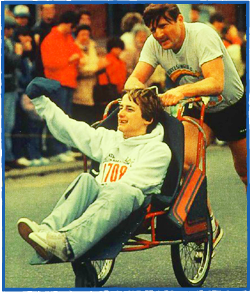
A new story shows up in my inbox every day from DailyLit.com. It is a great way to read the fifty-two short stories. Today I read "Unstoppable" about Team Hoyt, father and son long-distance runners. The Hoyts' son, Rick, was born with cerebral palsy and was unable to walk or talk.

"In high school, Rick learned of a five-mile charity run for a newly paralyzed teenager. Rick told his father they had to do something to send a message that life goes on. Even though he wasn't a runner, Dick never hesitated. He'd run the race, pushing Rick's wheelchair the whole way. They finished next to last. It was a victory. At the finish line, Rick typed out these words: when I'm running, it feels like my disability disappears."

With that message, the father knew what he had to do. He kept running in races and his son was always out in front. They ran 229 triathlons, 66 marathons, and 6 Ironman races. "Rick Hoyt still can't walk. But with his father, they both fly."

Team Hoyt's motto is, "Yes you can!"

What a great example of a father's love for his son.

Friday, February 5, 2010

Bionic Breakthrough


Sometime back, I wrote about the robotic devices that could someday make it possible for us to walk and take stairs safely as Kennedy's Disease progresses. Well, yesterday I was watching Good Morning America on ABC and they had a clip on a fourteen person clinical trial that is being carried out at thee Moss Rehabilitation Center in Philadelphia, Pennsylvania. The trial is to see if something called the ReWalk (bionic legs) manufactured in Israel by ArgoMedtec can allow paraplegics with serious spinal cord injuries to stand up, walk, and even take stairs. You have to be able to use your arms to make the device work. The company hopes to have FDA approval by the end of this year.

Go to ABC News – GMA, click on the Thursday tab and in the second row is a video for Bionic Breakthrough. For a longer video that shows more of the capabilities of the ReWalk, go to Med-Gaget. An excerpt from the article follows:

ReWalk comprises a light wearable brace support suit which integrates DC motors at the joint, rechargeable batteries, an array of sensors and a computer-based control system. It fits the body snugly to detect upper body movements, which are used to initiate and maintain the walking process. Wearers also use crutches for stability and safety.

ReWalk is undergoing clinical trials in Israel at the Rehabilitation Hospital at Chaim Sheba Medical Center - Tel Hashomer, with pilots planned for rehab centers in Holland and Italy. A US trial is scheduled to begin in November at the Moss Rehabilitation Center in Philadelphia, after which Argo will apply for FDA regulatory approval.

Argo's demo video features team member Radi Kioff, a 40-year-old Druze Israeli citizen who was shot in the back while serving in the Israel Defense Forces during the first Lebanon War. Ironically, the man who devised the system that allows Kioff to walk cannot benefit from his own invention. A quadriplegic, Amit Goffer has only partial use of his hands, but not enough to operate the ReWalk.

The manufacturer, ArgoMedtec, also has a webpage that discusses the ReWalk Robotic Suit. An excerpt from this page follows:

ReWalk™ works with users – not just for them. Users walk with the assistance of crutches, controlling suit movement through subtle changes in center of gravity and upper-body movements. In addition to simplifying suit control, this user participation in mobility brings tangible health and emotional benefits. ReWalk™ is not just a vertical wheelchair – ReWalk™ restores the element of control over mobility so lacking for wheelchair users.

As any sedentary wheelchair user can attest, life in a wheelchair carries a hefty healthcare price tag. Serious problems with the urinary, respiratory, cardiovascular and digestive systems are common, as well as osteoporosis, pressure sores and other afflictions.

Functionality:
  • All day usage
  • Mobility – walking, sit-to-stand, stand-to-sit, climb stairs, ascending/descending slopes, driving
  • Training – replacing other training equipment at home and at rehabilitation center
Prerequisites:
  • Ability to use hand and shoulders (walking with crutches)
  • Healthy cardiovascular system and bone density

I am not saying that this will work for any of us living with Kennedy's Disease, but it sure seems like it might be something that could help us remain ambulatory longer.


Please feel free to comment. By taking a moment to share your thoughts you add much to these articles. The articles then become more than just something I said or believe. In addition, by adding a comment, you might just be helping the next reader by sharing your opinion, experience, or a helpful tip. You can comment by clicking on "comments" below or by sending me an email. I look forward to hearing from you.

Wednesday, September 2, 2009

The Social Security – Disability Application Process – Part I


Social Security – Disability (SS-D) is important to many of us who have to retire early because of health related issues (i.e., Kennedy's Disease). A few years ago, I wrote a 'guide' for applying for SS-D based upon my experience. Since the guide is twenty pages long, in this post I will try to focus on a few key 'learnings' that might make the process easier for you if you ever need to apply. At the end of Part II, I will provide a link to the actual PDF guide.


First, it is important that you understand how Social Security defines 'disability'. That is because other programs have different definitions for disability. Some programs pay for partial disability or for short-term disability. Social Security does not. Disability under Social Security is based on your inability to work. You will be considered disabled if you cannot do work you did before and they decide that you cannot adjust to other work because of your medical condition(s). Your disability also must last or be expected to last for at least a year or will result in death. [Note: Progressive disorders are different and this is why you need to work with your doctor and your Social Security representative in order to explain the gradual and continual loss of certain functions]


Here is how to make the process work for you:

A doctor who reviewed disability claims for a Fortune 100 company gave me the following advice on the disability application process.

  • Apply immediately – do not wait until you are totally disabled before beginning the process.
  • Be patient. The process takes time. It is not uncommon to wait 90-120 days before hearing the results of the application.
  • Take the time to fill out the forms completely. The disability process is no different from any other application process (e.g., home loan, employment, etc.). Leave little to interpretation.
  • Remove your emotions from the application process. Think of it as a business deal – your business. Learn the rules of the game and make the rules work for you. The 'red-tape' and follow-up letters asking for additional information are all part of the game.
  • Understand how the forms are written. The disability process is written for people with a sudden illness or disability – not for people with progressive illnesses where there is no treatment or cure.
  • Understand the process. Remember that the Social Security Administration is a government agency. Many applications are denied the first time.

I will add three more comments based upon my experiences with the Social Security Administration.

  • Document everything. The more information you can provide up front, the smoother the process will go.
  • Take the time to educate the reviewer. Do not expect the reviewer to understand Kennedy's Disease or your specific situation. The reviewer can be an excellent advocate if she understands Kennedy's Disease and your disability.
  • Be prepared. The more prepared and organized you are, the better the chance for approval. (My award was approved in six weeks)

In my next post, I will discuss:

  • How to be better prepared
  • How long the process should take
  • Other tips to help speed up the process