Showing posts with label Exercise. Show all posts

Wednesday, May 29, 2019

Joint Participation in Improving your Health and Relationships


Below is another great post from Richard Wright. Its focus is on senior citizens and their caregivers using mindfulness meditation and yoga to improve their mental and physical health while participating in an activity they are both involved in. 

I have practiced mindfulness meditation for several years now. Every day, after my morning exercises and stretches, I will meditate. I’ll often meditate again in the early afternoon. Stretching, along with daily exercise is beneficial for all of us living with Kennedy’s Disease (SBMA). 

Many senior centers and YMCAs offer programs in stretching, yoga, and mindfulness meditation. For the self-starters, Richard has included links to sources on the internet that offer podcasts on these topics. 

Let me reemphasize the important side benefit of “participating together.” Living with any debilitating disorder is difficult for the individual as well as the caregiver. It can also be a rewarding experience, especially when activities are done together. Thank you, Richard.


This Is How Yoga and Meditation Can Transform the Lives of Seniors (And Their Caregivers)

Without proper stimulation and health-boosting activities, the lives of seniors and their caregivers can quickly become monotonous. There’s nothing wrong with having a routine, but it should include activities to get your blood flowing, improve strength, expand your mind, and relieve stress. You might be wondering how you’ll have time to achieve all those goals, but the good news is that yoga and meditation provide all of those things and more. In addition, they are activities the two of you can enjoy together or alone, which can help foster a healthy bond.


Yoga Offers Senior-Specific Benefits

When done safely and properly, yoga provides many wonderful benefits for seniors and caregivers alike. For starters, it can help strengthen bones to minimize, prevent, or slow the progression of osteoporosis, as well as keep your weight in check to prevent it from interfering with your mobility and desire for a more active lifestyle. Yoga is a low-impact exercise with a focus on slow, fluid movements, which can help seniors build strength and balance.


There are benefits for the mind, as well. Most styles of yoga include focused breathing and meditation, which can help seniors and caregivers keep their mind clear and sharp. Additionally, this practice can spike the brain's production of GABA, the chemical that keeps you calm and relaxed. Yoga requires instruction and guidance to keep you safe, so classes at your local yoga studio are the best place to start. However, if you’re looking to get a group of seniors together with a shared interest in yoga, try a senior meetup group.

Meditation Can Stave Off Loneliness

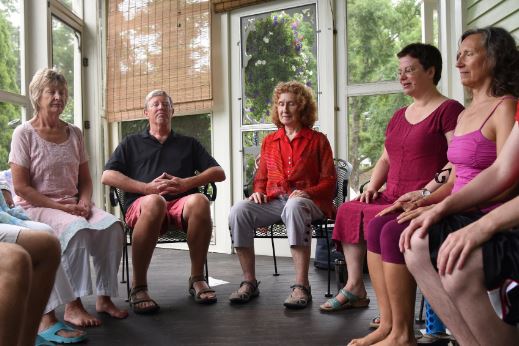
Just like wrinkles and gray hair come with age, loneliness is common in seniors. Perhaps loved ones have passed away or children, family members, and friends no longer live close by. Loneliness has other impacts too. According to Psych Central, “loneliness is known to activate inflammatory genes which, in turn, are known to promote a variety of diseases” However, the study found that mindfulness meditation reduced feelings of loneliness in seniors via regular class attendance, and even reduced the genes that are markers for heart disease and inflammation. Meditation is an integral part of yoga, but it can be practiced on its own as well. There are several beginner podcasts online that will walk you through a meditation session.

Commit to the Practice

Yoga and meditation require dedication and consistent practice. There will be some days when getting to a class isn’t possible, or perhaps you’d just like to be able to practice at home once you learn the proper technique. To achieve this, you’ll need to clear out a room to give you enough space to safely and comfortably practice. It is best to create a dedicatedspace, as you’ll likely grow tired of having to move around furniture and items every time you want to practice. If need be, move some of your belongings into storage to free up space. Incorporate soothing sounds, scents, colors, and lighting for a truly zen experience.

Safety Comes First

Whether you are practicing yoga, meditation, or both, safety should always be your top priority. Yoga is appropriate for all ages, but seniors will benefit from gentle classes such as Iyengar, Viniyoga, and Kripalu. Most yoga studios offer gentle/beginner classes and can help you adapt the poses using chairs and props. As the caregiver, it is your job to communicate with the instructor about the needs and abilities of your senior loved one. This includes disclosing physical and mental ailments, as well as their mood for the day.

Life can be difficult at times for both seniors and caregivers. For this very reason, self-care is crucial. Yoga and meditation combine physical and mental health benefits for a relaxing activity the two of you can explore together.
Photo Credits:

Wednesday, May 1, 2019

Study of High-intensity Training for SBMA Patients

SMA News Today published the following report on a recent "small" study. The number of participants and the duration of the study concerns me. I hope they follow up with more participants of various stages of progression, and for a longer period of time (six months or more).


High-intensity Training Improves Fitness While Being Safe for Patients with Kennedy’s Disease, Small Study Suggests

High-intensity training can improve fitness and may be performed safely by patients with spinal and bulbar muscular atrophy (SBMA), a small pilot study suggests.

According to patients, high-intensity training (HIT) did not increase their muscle fatigue and was preferred to other workouts. Although more studies are needed to understand the long-term benefits and compliance of patients to HIT, researchers recommend that the exercise be considered as part of rehabilitation therapy for SBMA.

The study, “High-intensity training in patients with spinal and bulbar muscular atrophy,” was published in the Journal of Neurology.

Exercise of low or moderate intensity does not seem to benefit patients with SBMA — a rare adult-onset form of spinal muscular atrophy (SMA) also known as Kennedy’s disease — which is characterized by muscle wasting and weakness in the arms and legs. In fact, low- and moderate-level exercise can produce muscular fatigue in these patients.

HIT is a form of cardiovascular exercise that alternates short periods of intense anaerobic exercise with less intense recovery periods. This type of workout has been shown to be time-saving and efficient for healthy individuals. HIT may also benefit SBMA patients because motor neurons — the nerve cells that control muscle activity and are damaged in SBMA — are only active for a small period of time.

To test this possibility, researchers at the University of Copenhagenand Aarhus University Hospital, in Denmark, conducted a small study to investigate if HIT is feasible and safe, and if it can improve the fitness in SBMA patients.

Patients were randomized to a supervised eight-week training, followed by optional self-training for another eight weeks, or they received no training (usual care) followed by an unsupervised, at-home eight-week training.

Training included eight minutes of warm-up followed by two five-minute cycles on a stationary bike, with three minutes of recovery in between. Each cycle was based on the 30–20–10 s concept, which consisted of low-, moderate-, and high-speed cycling for 30, 20, and 10 seconds, respectively, in five minutes.

Before training, the patients received a class and an audio file with a recorded training guide to use at home. During training, they wore a pulse-watch to record heart rate, intensity of training, and patient compliance.

Of the 10 male SBMA patients who participated, eight completed the study — half in the supervised and the other half in the unsupervised group.

Both maximal oxygen consumption (a measure of exercise capacity) and maximal workload were tested before and after the training program during an incremental exercise test — a test where participants have to perform exercise that increases in intensity over time.

Taken together, training improved both fitness and workload performance in all patients after eight weeks. This was evidenced by an 8% increase in maximal oxygen consumption and a 16% greater maximal workload, compared with the start of the study.

The training was safe, as judged by stable creatine kinase levels, a blood marker of muscle damage. Patient-rated muscle fatigue, muscle pain, and activity levels also remained the same over the training period.

Moreover, all patients preferred the high-intensity training compared with other workouts. In fact, three of the four patients who completed supervised training wished to continue the program for eight more weeks without supervision.

At the end of their entire training period (16 weeks), the participants maintained their improvements in maximal oxygen consumption and workload.

However, the training program did not change the patients’ walking capacity (as assessed by the 6-min walk test) and tended to reduce their walking distance slightly from a daily average of 3.1 to 2.4 km.

“In conclusion, HIT is well-tolerated and safe for patients with SBMA. It increases fitness and training does not decrease patient’s daily activity level, and should be considered as a rehabilitation strategy for patients affected by SBMA,” the researchers wrote.

Compared with other low- and moderate-level training modalities, HIT seems to work better to improve patients’ fitness and is favored by patients, they said.

“A likely explanation for the efficacy of HIT and inefficacy of lower intensity training in SBMA could relate to the longer period of restitution between training bouts, and the shorter period that the large motor units in SBMA need to be active vs. longer duration low-to-moderate-intensity training,” the researchers said.

Future studies should evaluate the long-term effects and compliance of high-intensity training for this patient population, they added..

Tuesday, January 22, 2019

Swim Training Improves Muscle Function in Mouse Model of ALS, Study Shows

I know of several men with Kennedy's Disease (SBMA) who expressed how good they felt and how much better/safer their exercise routine is in the pool. I never tried it. Below is an article on the benefits of swim training in mouse models with ALS. Clink on the header below to read the entire article or go to the bottom of this page and follow the link to the actual published report.

Swim Training Improves Muscle Function in Mouse Model of ALS


... Findings revealed that ALS mice had reduced muscle strength (70% less between 11 and 15 weeks), and showed significant alterations in energy metabolism (30% less citrate synthase activity, and higher activities of cytochrome c oxidase and malate dehydrogenase), and high levels of oxidative stress markers compared with controls.

However, swim training reduced the loss of muscle strength associated with ALS (5% less between 11 and 15 weeks), and increased citrate synthase activity by 26% compared with ALS mice that did not undergo swim training.

According to previous studies, swim training prolongs the lifespan of ALS mice by 10% to 13%. However, “from a clinical point of view, not only prolongation of lifespan, but also sustained functionality and inhibition of muscle waste are critical elements of therapy,” the study said.

“In agreement with previously published data, swim training significantly decreases the reduction in muscle strength clearly visible at the symptomatic stage of ALS, . . . reduces oxidative stress, and improves muscle energy metabolism at terminal stage of the disease,” the researchers stated.

“Our findings indicate that swim training is a modulator of skeletal muscle energy metabolism with concomitant improvement of skeletal muscle function in ALS mice,” they concluded.

Here is the link to the report on the study:  https://www.mdpi.com/1422-0067/20/2/233/htm

Monday, January 14, 2019

Using Exercise and Other Physical Therapy Interventions to Optimize Functional Mobility

Below is a link to a PDF that was used for a presentation at the KDA annual conference. Anyone who follows my blog knows that I highly recommend developing a frequent and sustainable "smart" exercise program for those of us living with Kennedy's Disease (SBMA). The presentation expounds upon the benefits of a regular exercise program as well as provides warnings and tips.

As always, I recommend three things:
1. Consult with your doctor and a physical therapist before beginning any exercise program.
2. A PT familiar with KD or ALS is essential in the design of a sustainable program.
3. Don't overdo. Listen to your body.

Using Exercise and Other Physical Therapy Interventions to Optimize Functional Mobility

Joseph Shrader, PT, CPed

Click on this link to see some other presentations that given at the annual conference.

Friday, April 6, 2018

What Can I Do?

One of the most frequently asked questions that the Kennedy’s Disease Association (KDA) receives is, “What can I do to help ease the symptoms?


There are some commonsense principles that can help minimize the impact of certain symptoms as well as maintain, or improve, your quality of life. Some of these are also good for your general health.

A few examples follow:
  • Stay active – This is the best way to maintain your quality of life. Keep engaged in activities that stimulate your mind, spirit and body. Look for new activities and hobbies that will be interesting and fun. 
  • Stay engaged – Maintaining a support system is critical to your mental and emotional health. Family and friends help keep your mind stimulated. A good laugh is one of the healthiest activities you can participate in. 
  • Maintain a healthy weight – The more weight you carry, the more difficult it is to remain active and mobile. Excess weight also affects your heart, lungs and joints. 
  • Exercise regularly, but smartly – Some exercise is good, but too much can be detrimental. I have found that performing light exercises every day minimizes or eliminates joint and muscle pain. It also stimulates my heart and lungs as well as my motor neurons and muscles. There is a ‘Smart Exercise Guide’ on the KDA website you might want to review. Ask your doctor to recommend a physical therapist who is familiar with progressive motor-neuron diseases. 

If you aren’t already active or engaged, “don’t try to add too much into your daily routine all at once.” Habits need to change over time.
  1. Discuss and prioritize the opportunities with your family and friends. They are an excellent support system. 
  2. Select the highest prioritized opportunity. 
  3. Transform the opportunity into an activity that you feel you would enjoy doing. 
  4. Develop a plan on how to implement the activity. Write the steps down – visualize them. Note: If you have other health issues, check with your doctor before implementing any exercise program. 
  5. Ask for support from those who are willing to help. An exercise partner, for example makes the task more fun. 
  6. Implement your plan. 
  7. Track your results and review weekly how you are doing. 
  8. If necessary, adjust your plan. 
But, always remember to...

“Be safe—Pace yourself—Don’t overdo—Have fun.”


Friday, March 9, 2018

Not Everything is Predictable

Those of us living with Kennedy's Disease often like to compare symptoms, CAG Repeats, age of onset, and progression. I believe we do this to feel either better or perhaps worse about ourselves. Unfortunately, not everything is predictable about this gene defect. Allow me to give some examples.

Age of Onset: This could be anywhere from the teens to the 60s. Most often symptoms begin to appear in the 30s and 40s.

CAG Repeats: The number of repeats can be anywhere from the low 40s to the 60s. 34-39 is considered "borderline" and the person might only experience mild symptoms. Researchers now believe the higher the Repeats, the earlier the onset.

Progression and Severity: The earlier the onset, the greater the progression (more severe the condition). This is just a time factor. If onset begins in the 50s for one person and the 30s for another, the 30s person will have experienced 20 years of progression before the 50s person even experiences symptoms.

Symptoms: You would tend to believe that symptoms would be something you could count on, but that is not true either. There is a long list of potential symptoms, but not everyone has the same symptoms, nor do the symptoms appear at the same time in the progression of the disease. Go figure!

What else do we know about the disease?

Pneumonia: This is something that is not kind to us. Almost every doctor encourages us to have the pneumonia vaccination and the booster at age 65. They also recommend the Pneumococcal vaccine today. The flu is something we should also be concerned about because many times it can result in pneumonia. Once again, doctors encourage that you have an annual flu shot.

Exercise: Neurologists have not determined the true value of exercise for those of us with the defect. There is a consensus, however, that exercise if important to our wellbeing. The reason could be as simple as the benefits of endorphins and adrenaline to our general mental, emotional and physical health. Several doctors believe that it is important to continue to stimulate the motor neurons and muscles to keep them healthy as long as possible. And, “muscle memory” is very effective in helping to keep you mobile and upright. Everyone does agree that over-exercising does more harm than good. I can attest to that.

There is also the feeling that exercise and stretching helps "cell inhibition." Cell inhibition is what happens when an activity, such as an exercise, temporarily blocks an unpleasant sensation like a chronic pain. The nerve transmits the pain signal to a cell in the spinal cord that is inhibited by the new "traffic" caused by the stimulus (exercise routine). It is why pinching the cheek blocks the pain from the anesthesia needle in dentistry. Exercise and stretching (working the muscles and joints) produces stimuli for the spinal cord and brain (central nervous system), which is one reason we feel better when we move.

Sedentary Concerns: As the disease progresses, most of us with the defect become less active. We tend to spend more time sitting and do not work our metabolic system. For many of us, "couch potato" is a good phrase that exemplifies our lifestyle as the disease progresses. Weight gain and potential health complications because of the weight, as well as the additional strain on our existing weaker muscles, are always a concern.

Not Everything is KD Related:
Just because we have Kennedy's Disease does not mean we are immune to other ailments and health issues. Diabetes, heart and lung disease, kidney failure, as well as many other health concerns are always a possibility as the body ages and based upon hereditary issues.

Continue seeing your regular doctor:
 Regular physicals and doctor's visits are important for your general health and wellbeing. One man, for example, complained for months about chest pains. He blamed them on Kennedy's Disease and felt he could not do anything about them. The pain finally became severe enough that he saw his doctor. Doctors diagnosed him with having blockage in his arteries.


Please feel free to comment. By taking a moment to share your thoughts you add much to these articles. The articles then become more than just something I said or believe. In addition, by adding a comment, you might just be helping the next reader by sharing your opinion, experience, or a helpful tip.

Friday, July 7, 2017

Exercise! Are you kidding me?

If you are a frequent reader of my blog, you are aware of my feelings on the benefits of a regular exercise and stretching program. I exercise every day. I alternate between heavy (90+ minutes) and light days (30+ minutes). I exercise in the morning and in the evening. I don’t expect everyone to be as crazy as I am, but I do hope everyone will find a comfortable exercise routine that become part of your everyday routine.

Pulmonary and cardiac benefits, as well as joint lubrication and muscle memory, are the main reason I exercise. If I didn’t feel I was receiving any benefits from the routine, I wouldn’t do it.

Finding your own exercise program and routine is important. For that reason, I am including links to several articles on exercise and exercise programs. There are many more available on the internet, but these might be of benefit. As always, before starting any exercise program, discuss it with your doctor. And, if possible, have a physical therapist work with you initially to evaluate and recommend a program that fits your particular needs.


Monday, June 5, 2017

It’s Never Too Early or Too Late

If you are a regular reader, you know that I encourage staying active, mentally, socially and physically. Just because we have a life-changing condition, doesn't mean we have to sacrifice our life.

It is far too easy to allow the problems of the world, and with your health, to drag you down. I read an interesting article by Dr. Heather Snyder in The Costco Connection this weekend. She referenced “10 Ways to Love your Brain” from the Alzheimer’s website.


"Growing evidence indicates that people can reduce their risk of cognitive decline by adopting key lifestyle habits. When possible, combine these habits to achieve maximum benefit for the brain and body. Start now. It’s never too late or too early to incorporate healthy habits."
  1. Break a sweat. Engaging in regular physical activity. It elevates the heart rate and increases blood flow in the brain and body. We might not be able to do what we used to do, but we can still get a workout. I believe the key word here is ‘regular’.     
  2. Hit the books. Study in any stage of life will help reduce the risk of cognitive decline and dementia. Take a class; learn a foreign language, or a new instrument; or join a book club. Challenge your brain by trying something new/different.
  3. Butt out. Evidence shows that smoking increases risk of cognitive decline. Quitting smoking can reduce that risk to levels comparable to those who have not smoked.
  4. Follow your heart. Evidence shows that risk factors for cardiovascular disease and stroke — obesity, high blood pressure and diabetes — negatively impact your cognitive health. Take care of your heart and your brain just might follow.
  5. Heads up! Brain injury can raise your risk of cognitive decline and dementia. Wear a seat belt, use a helmet when playing contact sports or riding a bike, and take steps to prevent falls. I’ll repeat this last one … take steps to prevent falls.
  6. Fuel up right. Eat a healthy and balanced diet that is lower in fat and higher in vegetables and fruit to help reduce the risk of cognitive decline. Although research on diet and cognitive function is limited, certain diets, including Mediterranean and Mediterranean-DASH (Dietary Approaches to Stop Hypertension), may contribute to risk reduction.
  7. Catch some Zzz's. Not getting enough sleep due to conditions like insomnia or sleep apnea may result in problems with memory and thinking.
  8. Buddy up. Staying socially engaged may support brain health. Pursue social activities that are meaningful to you. Find ways to be part of your local community — or, just share activities with friends and family.
  9. Stump yourself. Challenge and activate your mind. Build a piece of furniture. Complete a jigsaw puzzle. Do something artistic. Play games, such as bridge, that make you think strategically. Challenging your mind may have short and long-term benefits for your brain.
  10. Take care of your mental health. Some studies link a history of depression with increased risk of cognitive decline, so seek medical treatment if you have symptoms of depression, anxiety or other mental health concerns. Also, try to manage stress.


Friday, December 30, 2016

The end of another year

My legs went into a slide in early November. The quads and left knee weakened dramatically. Several times a day I felt the left knee was going to buckle on me. I haven’t experienced anything like this in years. At times it was difficult not to become too concerned about my future capabilities. Compromise and compensation, leverage and innovation—I tried everything I could think of. I was not going to give up or give in.

Some days I could only accomplish 50% of my normal standing leg exercises. I was also finding it difficult to pull up my pants after using the toilet. Several times it took 2-3-4 attempts while having to rest for a moment or two between attempts. Occasionally I had to have my wife help. Frustration and even anger wedged its way into my normal positive attitude. But, I am a stubborn cuss.

I never gave up trying to complete my standing exercises. I pushed myself while always considering my safety. Over time I was able to regain enough strength to perform 80% of my previous reps. A week ago I wrote in my KD exercise journal that perhaps this was the new normal for me, but I still refused to accept it.

This morning when I first stood up I sensed a strength in my legs that I haven’t felt in a couple of months. When I began my standing leg exercises I could feel a difference—a confidence in my leg muscles. Muscle-memory kicked in and I found myself smiling. I performed 120 steps in place without a problem. I then performed 100 standing leg lifts without breathing hard. I was on my way and life couldn’t be any better.

I don’t know what the new year will bring, but I can tell you it is ending in a most gratifying fashion.

Be well and stay upright!


Happy New Year Photo: http://www.wishespoint.com/

Friday, November 25, 2016

SBMA Study published regarding the AR113Q Muscle

This research paper was published a month ago.

Rescue of metabolic alterations in AR113Q skeletal muscle by peripheral androgen receptor gene silencing

Elisa GiorgettiZhigang YuJason P. ChuaRyosuke ShimamuraLili ZhaoFan ZhuSriram VennetiMaria PennutoYuanfang GuanGene Hung, and Andrew P. Lieberman1,


Highlights

•Decreased expression of carbohydrate metabolic genes characterizes AR113Q muscle
•AR113Q skeletal muscle shows decreased glycolysis and altered mitochondria
•Peripheral gene silencing by ASO rescues expression of muscle energy metabolism genes
•Altered muscle energy utilization contributes to non-neuronal disease manifestations


Summary

Spinal and bulbar muscular atrophy (SBMA), a progressive degenerative disorder, is caused by a CAG/glutamine expansion in the androgen receptor (polyQ AR). Recent studies demonstrate that skeletal muscle is an important site of toxicity that contributes to the SBMA phenotype. Here, we sought to identify critical pathways altered in muscle that underlie disease manifestations in AR113Q mice. This led to the unanticipated identification of gene expression changes affecting regulators of carbohydrate metabolism, similar to those triggered by denervation. AR113Q muscle exhibits diminished glycolysis, altered mitochondria, and an impaired response to exercise. Strikingly, the expression of genes regulating muscle energy metabolism is rescued following peripheral polyQ AR gene silencing by antisense oligonucleotides (ASO), a therapeutic strategy that alleviates disease. Our data establish the occurrence of a metabolic imbalance in SBMA muscle triggered by peripheral expression of the polyQ AR and indicate that alterations in energy utilization contribute to non-neuronal disease manifestations.

Thursday, June 18, 2015

A randomized controlled trial of exercise in spinal and bulbar muscular atrophy


The trial to determine if exercise has any beneficial or harmful effect for those of us with Kennedy’s Disease was published in Annals of Clinical and Translational Neurology.

Objective: To determine the safety and efficacy of a home-based functional exercise program in spinal and bulbar muscular atrophy (SBMA).

Kenneth Fischbeck, MD, Christopher Grunseich, MD, and Angela Kokkinis, BSN, RN of the National Institutes of Health (NIH) added the following comments to the report:

“The trial did not show a statistically significant change in the primary outcome measure, the AMAT, overall.  However, a subgroup analysis done after the study did indicate that low-functioning men with SBMA may respond better to functional exercise. We also found that functional exercise is safe and well tolerated.”


Saturday, December 20, 2014

Oh Yeah!


My annual wellness checkup went well. Heart, lungs, blood pressure, pulse rate, cholesterol, etc. were all very good. Everything compares well, and in some cases better, to the last few years. My doctor, who proclaims he my cheerleader, commented that I shouldn’t change what I am doing because it is working. He feels my daily exercise program continues to pay dividends. Of course, I added this milestone to my Gratitude Journal.

Of course, seeing the waiting room of the doctor’s office filled with people, many coughing or sneezing, doesn’t give someone ‘healthy’ a vote of confidence. The flu this year has affected so many.  Some offices and schools have closed in our area. My nurse said she has never it seen it this bad this early in the season.  Of course, I was trying to be extra cautious.

I added something to my journal this morning that I never thought would happen again. I filled up my car this morning and the gas only cost $1.93 a gallon. This is a real gift for those traveling this coming week. My wife and I were trying to remember the last time gas was this cheap. I Googled it and it was the summer of 2008 and before that the spring of 2005.  I thought it had been longer.

Happy Holidays