Showing posts with label Caregiver. Show all posts

Wednesday, May 29, 2019

Joint Participation in Improving your Health and Relationships


Below is another great post from Richard Wright. Its focus is on senior citizens and their caregivers using mindfulness meditation and yoga to improve their mental and physical health while participating in an activity they are both involved in. 

I have practiced mindfulness meditation for several years now. Every day, after my morning exercises and stretches, I will meditate. I’ll often meditate again in the early afternoon. Stretching, along with daily exercise is beneficial for all of us living with Kennedy’s Disease (SBMA). 

Many senior centers and YMCAs offer programs in stretching, yoga, and mindfulness meditation. For the self-starters, Richard has included links to sources on the internet that offer podcasts on these topics. 

Let me reemphasize the important side benefit of “participating together.” Living with any debilitating disorder is difficult for the individual as well as the caregiver. It can also be a rewarding experience, especially when activities are done together. Thank you, Richard.


This Is How Yoga and Meditation Can Transform the Lives of Seniors (And Their Caregivers)

Without proper stimulation and health-boosting activities, the lives of seniors and their caregivers can quickly become monotonous. There’s nothing wrong with having a routine, but it should include activities to get your blood flowing, improve strength, expand your mind, and relieve stress. You might be wondering how you’ll have time to achieve all those goals, but the good news is that yoga and meditation provide all of those things and more. In addition, they are activities the two of you can enjoy together or alone, which can help foster a healthy bond.


Yoga Offers Senior-Specific Benefits

When done safely and properly, yoga provides many wonderful benefits for seniors and caregivers alike. For starters, it can help strengthen bones to minimize, prevent, or slow the progression of osteoporosis, as well as keep your weight in check to prevent it from interfering with your mobility and desire for a more active lifestyle. Yoga is a low-impact exercise with a focus on slow, fluid movements, which can help seniors build strength and balance.


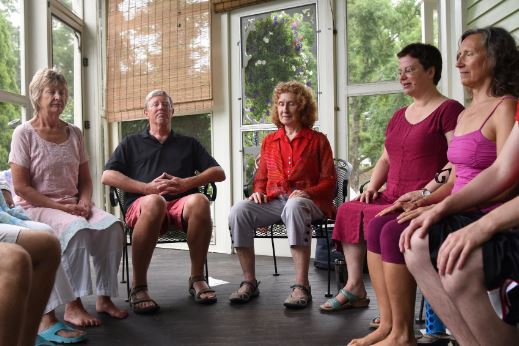
There are benefits for the mind, as well. Most styles of yoga include focused breathing and meditation, which can help seniors and caregivers keep their mind clear and sharp. Additionally, this practice can spike the brain's production of GABA, the chemical that keeps you calm and relaxed. Yoga requires instruction and guidance to keep you safe, so classes at your local yoga studio are the best place to start. However, if you’re looking to get a group of seniors together with a shared interest in yoga, try a senior meetup group.

Meditation Can Stave Off Loneliness

Just like wrinkles and gray hair come with age, loneliness is common in seniors. Perhaps loved ones have passed away or children, family members, and friends no longer live close by. Loneliness has other impacts too. According to Psych Central, “loneliness is known to activate inflammatory genes which, in turn, are known to promote a variety of diseases” However, the study found that mindfulness meditation reduced feelings of loneliness in seniors via regular class attendance, and even reduced the genes that are markers for heart disease and inflammation. Meditation is an integral part of yoga, but it can be practiced on its own as well. There are several beginner podcasts online that will walk you through a meditation session.

Commit to the Practice

Yoga and meditation require dedication and consistent practice. There will be some days when getting to a class isn’t possible, or perhaps you’d just like to be able to practice at home once you learn the proper technique. To achieve this, you’ll need to clear out a room to give you enough space to safely and comfortably practice. It is best to create a dedicatedspace, as you’ll likely grow tired of having to move around furniture and items every time you want to practice. If need be, move some of your belongings into storage to free up space. Incorporate soothing sounds, scents, colors, and lighting for a truly zen experience.

Safety Comes First

Whether you are practicing yoga, meditation, or both, safety should always be your top priority. Yoga is appropriate for all ages, but seniors will benefit from gentle classes such as Iyengar, Viniyoga, and Kripalu. Most yoga studios offer gentle/beginner classes and can help you adapt the poses using chairs and props. As the caregiver, it is your job to communicate with the instructor about the needs and abilities of your senior loved one. This includes disclosing physical and mental ailments, as well as their mood for the day.

Life can be difficult at times for both seniors and caregivers. For this very reason, self-care is crucial. Yoga and meditation combine physical and mental health benefits for a relaxing activity the two of you can explore together.
Photo Credits:

Friday, July 6, 2018

Long-Distance Caregivers


Image via Pexels

How to Get to Know Your Loved One’s Neighbors


Claire Wentz contacted me and asked if I would be interested in a guest post on caregivers. I said I would be interested if it is relevant to those of us Living with Kennedy's Disease or another type of progressive neuromuscular disorder. Below is an interesting primer on the subject along with links to additional resources. Thanks, Claire.

Summary

Caregivers ensure the safety, health, and happiness of those who cannot care for themselves. Many people find themselves in a caregiving position as senior loved ones age and develop common disabilities. If you are a caregiver for a family member that lives in another area, tap into the power of community to help. You may be surprised at how many neighbors are willing to lend a helping hand when it comes to caring for seniors.


What is a Caregiver?

When a person is unable to live alone safely, they often rely on a family member or loved one to step in as caregiver. A caregiver helps the person for which they are caring with the activities of daily living. They typically assist with basic living needs such as bathing, dressing, and grooming as well as any special medical needs. Caregivers are responsible for making sure there are meals prepared and that the person in need of care eats enough. They ensure that all housekeeping and transportation needs are met as well. Caregivers are also intermediaries between the cared and medical professionals-- doctors, nurses, specialists, etc. Furthermore, caregivers are a source of companionship for people. They help prevent loneliness and the medical complications that can result from it.

While people of all ages and conditions need caregivers, many people don’t find themselves in the position of needing one until they approach their senior years. As we grow older, health complications tend to increase. Because of this, older Americans are more likely to live with a disability than younger people. According to survey research from 2015, about a quarter (25.4 percent) of Americans ages 65 to 74 are living with a disability. About half (49.8 percent) of those ages 75 and older report living with a disability. Mobility problems are the most common health complication among older Americans.

When your senior loved one is incapable of taking care of themselves due to a health complication, it’s not always possible to pack up and move to where they live. In these situations, many people find themselves acting as a long-distance caregiver. As a long-distance caregiver, you face many challenges. Luckily, there are resources that can help.

It Takes a Village

We often here “it takes a village” in relation to bringing up a child, but the term can be equally meaningful when it comes to the care of seniors. America was founded on the idea that a person can be whomever and do whatever they want, which leads a lot of us to search for opportunities away from home. We don’t have the same cultural values as places like Japan, where children are expected to dutifully tend to their parents. It is possible to adhere to your American independence while caring for your older loved ones; it just takes some networking and creativity.

Organizations such as A Little Help connect seniors and their caregivers to the community around them. When the caregiver can’t be around to assist with certain activities, the service allows them to reach out to friends and neighbors who can. Organizations like A Little Help allow seniors with disabilities to maintain independence into their 80s or 90s, even when their primary caregiver doesn’t live in the same area. Beyond normal caregiving services, they can also help seniors with transportation, household and yard maintenance, and maintaining a healthy and active social life.

Beyond working with programs like A Little Help, long-distance caregivers can connect to their senior loved one’s community in other ways:

●     Plan a neighborhood potluck for the next time you are in town. Have neighbors and friends bring over their favorite recipes and set up some get-to-know-you games. Don’t ask for help during the party, but do have a guest book where people can log their phone numbers and email addresses.

●     Create a street or neighborhood Facebook group people can join. People are more likely to lend a hand if they know there is a network they can reach out to when they need one as well.

●     Go on walks with your senior loved one around the neighborhood. Stop and talk to people as you pass them walking their dogs or if you see them hanging out in their garages or front porches.

****
 Should you wish to learn more, visit Caring FromAfar or email Claire by clicking on her name.

Wednesday, February 28, 2018

Have you hugged your caregiver today?

Rosalyn Carter said, "There are only four kinds of people in the world – those who have been caregivers, those who are currently caregivers, those who will be caregivers, and those who will need caregivers."

Caregivers usually do not receive a lot of appreciation. Often caregivers, after giving and giving, day after day, end up needing to be cared for themselves. They not only feel the weight of the world on their shoulders for the person they are caring for, but they also have to care for their own needs and the needs of the other family members. Stress can build up in the caregiver. Depression is common among caregivers. When this happens, it is usually the result of feeling everything is their responsibility and they have nowhere to turn for help or support.

Living with Kennedy's Disease isn't just about me. It is about everyone who provides support. I have mentioned more than once, I am not always the easiest person to live with. To put it bluntly, my wife is a saint for putting up with me. Fortunately, she understands and accepts most of my shortcomings. In those rare occasions where I push back a little too much, a right uppercut straightens me out. 😎

For those of us that are fortunate enough to have a caregiver, we need to understand that the caregiver needs caring for, too. Unless contracted, caregivers almost never get a vacation or have time to just relax and pamper themselves. It is usually a 24-7 job. 

Caregivers need your emotional support, your understanding, and most importantly, your love when things do not quite go as planned.


The National Family of Caregivers provides the following "Tips for Caregivers."

1. Caregiving is a job. Reward yourself with personal time often.

2. Watch for signs of depression, and do not delay in getting professional help when you need it.

3. When people offer to help, accept the offer and suggest specific things that they can do.

4. Educate yourself about your loved one's condition. Understanding it will help you communicate effectively with the person and the doctors.

5. There is a difference between caring and doing. Be open to technologies and ideas that promote your loved one's independence.

6. Trust your instincts; most of the time they will lead you in the right direction.

7. Caregivers often do a lot of lifting, pushing, and pulling. Be good to your back.

8. Seek support from other caregivers. There is great strength in knowing you are not alone.

A good resource for caregivers can be found here:  Good Caregiver Tips Cheat Sheet

Sunday, October 22, 2017

Caregivers are People Too

The role of caregiver is often a thankless and often never-ending job. Fear, frustration, guilt, exhaustion, and burnout are often associated with long-term caregivers. Besides providing care, the caregiver is always thinking of ways to help make life easier for those in their care.

Caregivers also have another responsibility that is often lost in their daily duties. They also need to take care of his or herself including finding some “alone time” to recharge the batteries.

Far too often, the caregiver’s needs are forgotten. With the advent of cell phones and alert bracelets, being on-duty 24-7 doesn’t have to mean giving up their personal lives. And, even though we might say “Thanks” and “Provide Encouragement”, it is not enough. We need to find ways to be a caregiver to our caregiver. It can mean something as simple as giving the caregiver some “guilt free” time away from their duties. Or, it can mean encouraging the caregiver to go to a spa or the gym for a few hours—or, maybe taking in a movie or dinner with friends. Hobbies are also a wonderful distraction. 

The following are some tips from an article from the Family Caregivers Alliance. To read the entire article, click on this link.

TakingCare of YOU: Self-Care for Family Caregivers.


Summing Up

Remember, it is not selfish to focus on your own needs and desires when you are a caregiver—itʼs an important part of the job. You are responsible for your own self-care.


Reducing Personal Stress

How we perceive and respond to an event is a significant factor in how we adjust and cope with it. The stress you feel is not only the result of your caregiving situation but also the result of your perception of it—whether you see the glass as half-full or half-empty. It is important to remember that you are not alone in your experiences.


Setting Goals

Setting goals or deciding what you would like to accomplish in the next three to six months is an important tool for taking care of yourself.


Seeking Solutions

Seeking solutions to difficult situations is, of course, one of the most important tools in caregiving. Once youʼve identified a problem, taking action to solve it can change the situation and also change your attitude to a more positive one, giving you more confidence in your abilities.


Communicating Constructively

Being able to communicate constructively is one of a caregiverʼs most important tools. When you communicate in ways that are clear, assertive, and constructive, you will be heard and get the help and support you need.


Asking for and Accepting Help

When people have asked if they can be of help to you, how often have you replied, “Thank you, but I'm fine.” Many caregivers donʼt know how to marshal the goodwill of others and are reluctant to ask for help. You may not wish to “burden” others or admit that you can't handle everything yourself.

Be prepared with a mental list of ways that others could help you. For example, someone could take the person you care for on a 15-minute walk a couple of times a week. Your neighbor could pick up a few things for you at the grocery store. A relative could fill out some insurance papers. When you break down the jobs into very simple tasks, it is easier for people to help. And they do want to help. It is up to you to tell them how.

Help can come from community resources, family, friends, and professionals. Ask them. Donʼt wait until you are overwhelmed and exhausted or your health fails. Reaching out for help when you need it is a sign of personal strength.


Talking to the Physician

In addition to taking on the household chores, shopping, transportation, and personal care, 37 percent of caregivers also administer medications, injections, and medical treatment to the person for whom they care. Some 77 percent of those caregivers report the need to ask for advice about the medications and medical treatments. The person they usually turn to is their physician.

But while caregivers will discuss their loved oneʼs care with the physician, caregivers seldom talk about their own health, which is equally important. Building a partnership with a physician that addresses the health needs of the care recipient and the caregiver is crucial. The responsibility of this partnership ideally is shared between you, the caregiver, the physician, and other healthcare staff. However, it will often fall to you to be assertive, using good communication skills, to ensure that everyoneʼs needs are met—including your own.


Starting to Exercise

You may be reluctant to start exercising, even though youʼve heard itʼs one of the healthiest things you can do. Perhaps you think that physical exercise might harm you, or that it is only for people who are young and able to do things like jogging. Fortunately, research suggests that you can maintain or at least partly restore endurance, balance, strength, and flexibility through everyday physical activities like walking and gardening. Even household chores can improve your health. The key is to increase your physical activity by exercising and using your own muscle power.

Exercise promotes better sleep, reduces tension and depression, and increases energy and alertness. If finding time for exercise is a problem, incorporate it into your daily activity. Perhaps the care recipient can walk or do stretching exercise with you. If necessary, do frequent short exercises instead of those that require large blocks of time. Find activities you enjoy.

Walking, one of the best and easiest exercises, is a great way to get started. Besides its physical benefits, walking helps to reduce psychological tension. Walking 20 minutes a day, three times a week, is very beneficial. If you canʼt get away for that long, try to walk for as long as you can on however many days you can. Work walking into your life. Walk around the mall, to the store, or a nearby park. Walk around the block with a friend.


Learning from Our Emotions


It is a strength to recognize when your emotions are controlling you (instead of you controlling your emotions). Our emotions are messages to which we need to listen. They exist for a reason. However negative or painful, our feelings are useful tools for understanding what is happening to us. Even feelings such as guilt, anger, and resentment contain important messages. Learn from them, then take appropriate action.

Friday, January 20, 2017

Always Remember, You Are Not Alone

Several times a week I receive emails or comments from readers. Often, the person is reaching out, looking for help or support. Most of the time, it is the spouse or another loved one who makes contact on behalf of another. Last night I received a heartfelt request from a young woman whose husband was recently diagnosed with Kennedy's Disease. Below is a portion of my response to her. I post this hoping it might also help others.
______________________

The early years of Kennedy's Disease are the worst. Acceptance is difficult. You keep hoping and praying this is a mistake. You hide the changes that are going on in your life; often from even the ones you love the most. You constantly worry about losing the respect of others because you are no longer able or capable. Pride is a terrible adversary.

Worst of all, you believe you are letting down the ones you love. You are supposed to be the one who takes care of your spouse and your children. You visualize what you will be like in the future as the disease progresses and it crushes your hope. It becomes a constant battle of mind and emotions. And, all you do is make matters worse. You feel alone and isolated from the world you knew and loved.

Forty years of living with Kennedy's Disease affords me the opportunity to share with others that there is a life still worth living. Many of the fears I harbored in my thirties never came true in the way I envisioned them.

Living with Kennedy's Disease is a growth opportunity. You learn not to take things for granted and to be joyful and thankful for this wonderful life you have. You discover things about yourself that you never would have imagined prior to Kennedy's Disease. Since you read my blog, you know how important my gratitude journal is to me. It is my way of giving thanks for those special moments each day.

YOU ARE NOT ALONE. Those of us living with Kennedy's Disease are a family. We care about each other and we share our learnings and experiences. I have learned so much from my KD brothers. And, during my darkest hours, they lifted me up and helped me move forward.

My most important learning was life doesn't end with Kennedy's Disease. It just progresses in a different direction.


Before I end, I need to remind you that a spouse also has a difficult path ahead. The spouse often is the recipient of the anger, frustration and moods of the husband. My wife is my greatest blessing. She is there when I need help. She steps aside when I need to do something for myself; even if it means I will fail. She learned that living with Kennedy's Disease is not just something the husband goes through.

Sunday, March 6, 2016

The Power of Kindness

The story below has been around for at least ten years. I liked it because of it's simplicity of message. In the original version, this next sentence follows the story. Since this is my blog, I believe it should proceed it.

Too often we underestimate the power of a touch, a smile, a kind word, a listening ear, an honest compliment, or the smallest act of caring, all of which have the potential to turn a life around.


When I was young and full of p___ and vinegar, so many things went by unnoticed, or noticed and then forgotten. At some point in my life, I started to appreciate these little moments. And, fortunately for me, memories of many of those moments from my childhood and early adult years poured in. With the progression of Kennedy's Disease, the opportunity to notice these moments has increased substantially. Whether from a caregiver, a friend, or a stranger you pass on the street, the power of a smile, a hug, a kind word, etc. can change your world.

Even though you might have read this story before, I ask that you take a moment and read it again. It always brings a smile to my face and a warmth in my heart. Enjoy.


Lunch with God


A little boy wanted to meet God. He knew it might be a long trip to where God lived, so he packed his backpack with a bag of potato chips and a six-pack of root beer.

When he had gone about three blocks, he saw an old woman. She was sitting in the park, just staring at some pigeons. The boy sat down next to her and opened his backpack. He was about to take a drink from his root beer when he noticed that the old lady looked hungry, so he offered her some chips. She gratefully accepted them and smiled at him.

Her smile was so pretty that the boy wanted to see it again, so he offered her a root beer. Again, she smiled at him. The boy was delighted. They sat there all afternoon eating and smiling, but they never said a word.

As twilight approached, the boy realized it was time to go home. He got up to leave; but before he had gone more than a few steps, he turned around, ran back to the old woman, and gave her a hug. She gave him her biggest smile yet.

When the boy arrived home, his mother was surprised by the smile on her son's face. She asked him, "What did you do today?"

He replied, "I had lunch with God. You know what? She's got the most beautiful smile I've ever seen."

Meanwhile, the old woman returned to her home. Her son was stunned by the look of peace on her face. He asked, "Mother, what did you do today?"

She replied, "I ate potato chips in the park with God. You know, he's much younger than I expected."


Photo: 112629662430.jpg by wunee

Monday, January 11, 2016

Anyone for a game of Jenga?


In the right column of this page is the following explanation as to how I see “living with Kennedy’s Disease.”

"Life is a succession of lessons that must be lived to be understood." I have used the analogy that learning to live with Kennedy's Disease is like trying to cross a stream without getting wet. The only way is by using the stepping-stones provided (my chosen life's path). Each step is a "life experience" and I must come to terms with that experience (regain my balance) before being able to take the next step. It is a slow and often challenging journey, but I am finding it very fulfilling.

Now that I have difficulty safely walking, the analogy just doesn’t seem to fit my situation any longer. Recently I changed the photo at the top to a stack of stones. I felt the balancing act of creating a new world, a new way of living, was more relevant to my current situation. If I replace one stone with another and it doesn’t fit well, it could come crashing down.

The ability to live with Kennedy’s Disease, or any other progressive neuromuscular condition, requires constant adaption and acceptance as the disease progresses. For example, instead of requiring a cane or walker, you now require a scooter or wheelchair. Instead of getting by, it becomes a matter of constant adjustments to your daily life and routines. At some point, it is no longer about substituting or leveraging; it is about knowing when to ask for help, and how to let go of certain treasured capabilities. 

This morning I remembered playing the game of Jenga with family and friends. For those who haven’t played it, Jenga is a bunch of wooden blogs that are stacked about 12” tall at the beginning of the game. Players take turns and remove (pull out) a block. You don’t want to remove a block that causes the entire stack to crash. 

Living with a progressive condition is like playing Jenga – only you are the stack of blocks. When a block (capability) is removed, you have to adjust (adapt) to maintain your balance. At some point, you can’t make adjustments and you have to cling to the other blocks in hopes the entire stack (your self-worth and beliefs) is still strong enough to hold together. The minute you give up those essential elements of life, you risk crashing. As the condition progresses, more often, the other blocks are your family and friends. They step in (understand, adjust and adapt) to keep you standing. 

Treasure those other blocks that help support you when another block (capability) is weakened or removed.  

Sunday, June 7, 2015

Message of Hope When I Needed It


On March 07, I wrote an article about the neck problems I was experiencing. I received feedback from several people, all providing helpful thoughts and encouragements. 

One person commented by sharing her experiences with her father, who has Kennedy’s Disease. Even though I am normally against using devices, such as neck braces, something about her comments made me disregard my self-made, and often prideful, rules. 

I’ve included Susan’s comment below. The last paragraph and, specifically, the last two sentences are beautiful – a message of hope to someone who is always trying to inspire others to believe and to hope.

Thank you, Susan, for reaching out to me with your message of hope at a time when I needed some.

“Hi Bruce,
Thank you very much for your blog and your inspiring, patient and informative writing both here and on the Kennedy's Disease forum. My dad has Kennedy's Disease; we just discovered what it was 02/2014, though he has experienced progressive weakness for 20+ years.

Way back about 15 years ago (long before we knew what was going on), he started to experience weakness of his neck and couldn't hold his head up. So we--not knowing what else to do--bought a neck brace and he wore that every day to keep his head up.

And Bruce, it went away. I don't remember how long it lasted exactly (a couple or several months, not years). I don't know how or why. Nothing else has ever "gone away;" all the other weakness has gotten slowly worse. But after some time of wearing the neck brace around the clock, except while sleeping, he began to be able to hold his head up again. And, amazingly, he has never had issues with it since (and of course I pray this continues).

I know this isn't tremendously helpful, and certainly not scientific information; it almost seems like a stroke of luck or miracle. But I wanted to pass it along anyway. Maybe it has something to do with total rest for a while and you could try this...? Or maybe I'm just passing it along as a reason to hold out some hope, which can also be good. At least, after 20+ years fighting this alongside my dad, I've started to like hope for hope's sake.

With great respect and gratitude,
Susan”
Photo Credit:  Forlife by taliesin

Thursday, May 28, 2015

Burned Out?


This month’s newsletter from Humana had a good article for Caregivers. Some of these tips are more relevant than others for those of us living with Kennedy’s Disease. As a person with KD, I encourage my wife to become involved in other activities that she enjoys. Sometimes, her just being away from me for a couple of hours makes all the difference in the world. (Maybe there’s an underlining message here for me - J )
__________

Six Tips to Avoid Caregiver Burnout


It is easy to get burned out when you’re caring for a loved one. Here are some tips from WebMD.com to lower your stress and recharge.

  1.   Take time for yourself every day. Try yoga before breakfast, slip out for a 20-minute walk, go to the movies, or take time for a favorite hobby. Even a short break can help.
  2. Get enough sleep. Most caregivers who say their own health has gotten worse blame loss of sleep. Relaxation exercises, such as deep breathing, may help you at bedtime. If a loved one sleeps during the day but ix awake much of the night, try to take naps.
  3.  Join a support group. Look for support groups related to your loved one’s illness, if possible. The local agency on aging may have a listing. Or consider joining an online community.
  4. Let animals assist. Spending time with a cat or dog can be soothing to people who are sick or confined at home. Pets can lower blood pressure, reduce stress and even make elderly people more alert.
  5. Turn on some music. Music and art can spark fun shared moments for you and the person you’re caring for. Familiar music can bring back memories and may lead to clapping and dancing. Art projects should be simple and safe but not too childlike.
  6. Use timers and reminders. Buy pillboxes that sound an alarm when it’s time for the next dose. Try a smart phone app or an online medicine reminder. Pill organizers are a low tech option.