Showing posts with label conflict. Show all posts

Tuesday, August 16, 2011

Why are men so stubborn?

Okay, let me rephrase that.  Why was I so stubborn?
 
Living with Kennedy’s Disease is difficult enough, but when a man’s ego is involved the ‘living with’ process becomes that much worse.
 
I have written several articles about ‘acceptance’ and my ‘welcome’ statement on the right of this article ends with the comment that ‘acceptance is what I am working on today’.  As I look back over the years where I fought what was happening to my body, I truly wonder how different my life would have been if I would have swallowed my pride and just accepted Kennedy’s Disease for what it is.
 

Was I trying to be a martyr?


I had to endure self-inflicted suffering (mental and emotional) as well as pain to prove I could overcome Kennedy’s Disease.  At times I was almost like a martyr.  I would not share these feelings even with my family (including my wife) and closest friends.  I thought that ‘sucking it up’ and not expressing my concerns, declining capabilities and fears was some kind of badge of honor.
 
Boy was I wrong!  I experienced many falls and several injuries, fortunately most were minor, because I would not allow myself to accept that life is going to be different.  I also made excuses for not participating in certain events.  If I would have been honest with myself, as well as with others, about my physical limitations things would have been different … and mostly better.
 
This blog is almost like my penitence for all those years I would not admit, even though others knew, something was wrong.  In “The Nine Stages – Learning to Live with Kennedy’s Disease” I outlined the process a person must go through before being set free from the burden of facing living with Kennedy’s Disease alone.   
 

The eighth stage:  Acceptance

clip_image001 
Acceptance does not mean happiness or bring comfort. Instead, you are now able to accept and deal with the reality of the situation. Life can once again begin to move forward. You find that you can easily admit to yourself and others that you have the disease and that there is no cure, but also saying things like, “It’s okay … I can live with this.”
 
In my 2009 article called “Denial” I wrote:
I will twist the meaning of the adage, "Pride cometh before the fall," to reflect how this period of denial was a dangerous time for me. When I found out that I had Kennedy's Disease, the last thing on my mind was sharing that information with others, especially my boss and co-workers. My pride (ego, insecurity, or whatever you want to call it) would not let me admit to anyone that I had the disease. I was afraid that by admitting it, the relationships with my boss and peers might change and it could possibly hamper my career. During this period, I experienced several falls while working including one that resulted in a broken bone. Every one of these falls could have been avoided if I had been honest with myself and with my boss and co-workers.
 

Your do not have to be alone


So, if you are struggling with accepting Kennedy’s Disease, I am asking that you sit down with you wife, significant other or best friend and just talk it out. 
  • Let her or him know how you feel …
  • Express your concerns and fears …
  • Explain how you want to be seen and treated …
  • Discuss how, with their help, you can move past this period in your life and start living again. 
It is a first step (it will seem like a huge leap), but it is a necessary one.  It is amazing how free you feel once you have just said, “I have Kennedy’s Disease.”
 
As always, let me know if I can help

Sunday, July 3, 2011

You are not alone

There are times when we all have felt alone.  Some of the reasons we can feel that way are:
  • When we are harboring a secret … something we do not feel comfortable sharing even with loved ones. 
  • Or, when we have lost someone or something important to us and believe no one can truly understand what that loss means.
  • It also can happen when we do not feel like we fit in with a crowd or group of people. 
  • And, it can happen when we are hoping for a call or for someone to reach out to you, but we refuse to take the first step and make the call our self.
You are not alone

No matter what the reason, feeling alone is often unbearable and is not healthy. 

Several times a year I hear from someone who recently was diagnosed with Kennedy’s Disease.  The person feels alone – isolated from family and friends.  They do not want to hurt their loved ones by showing they are vulnerable … that this worries them … and that they are afraid. 

They carry the burden of what is happening to their body like a “scarlet letter”.  They also try to protect their family and friends by holding back.  They feel they should be able to “suck it up” (handle it).

You are not alone 1

Yet, by locking themselves away from their loved ones, they do more damage than good.  Even worse, wife or the significant other, family (especially the children), and friends also feel isolated because they also have a need to ‘talk it out’ …
  • They want to understand how you are doing. 
  • They also need to share that they are there for you … willing to help in any way possible.
  • And, they want you to know that they will always love you, no matter what happens.
Even if we believe the above, we still cannot always breach the subject.  We have always been there for others, but all of a sudden we are ‘one of the others’.  It was okay to be that shoulder to cry on or the listener when someone needed to talk.  But, for some reason we feel uncomfortable switching positions.  Why is that?

One of the most beautiful and reassuring moments is when you can finally open up and let it all out knowing that you are not being judged.  When you experience that moment, it is such a relief.  You finally feel that it is okay … they understand … they are there for me … and most importantly, you are not alone.

MyStock Photo of a Handshake only question for you is, “What are you waiting for?”  

P.S.  If you feel isolated or alone, let me know.  I will try to help.  I was there once; standing right beside you. 

Thursday, March 10, 2011

The first steps in my quest

My self-discovery quest begins today. 

A.  First I need to ask some fundamental questions to become grounded.
  • Who am I?  question in cloud
  • What is my purpose in life?
  • What would I do if I knew I could not fail?
  • What is holding me back?
B.  After I have done a little soul-searching, next I need to review “The Agreements” by Don Miguel Ruiz.
  1. Do not take anything personally.  Nothing others do or say is because of you.  It simply reflects their own life experiences and the training they received as children.
  2. Do not make assumptions.  Find the courage to ask questions and express what you really want.  Communicate clearly and do not become attached to preconceived ideas of what should happen.
  3. Always do your best.  Then, never second-guess or look back with regret.
All three agreements are important, but “not taking anything personally” will change my life.  When I take something personally, I feel offended and my natural reaction is to defend my beliefs and ideas.  This creates conflict. 

Live without fear by trusting that I am making responsible choices.  If I maintain a positive, loving attitude there is no room for negative thoughts and emotions.

And, most importantly, give myself permission to be happy and to enjoy life.

anger management

C.  When anger or frustration appears in my life …
  1. Before reacting, breathe correctly for sixty seconds.  Breathing will relax me and give me time to think things through and not just react.
  2. Ask these questions.
    1. Is it really important?  Will it be important in a week, month or year?
    2. Is my anger or frustration appropriate?  Perform a cost/benefit analysis by asking if getting angry is going to buy me anything?
    3. Can the situation by modified (changed) by looking at it differently or asking for help?  Give myself permission to ‘let it go’ (not become involved).
  3. Consider all the options.  Not everything can be fixed.  Is it worth taking action?  If yes, what would be the appropriate action?
  4. If action is necessary, take the time to organize my thoughts.  Always think things through before acting.
Okay, I have some work to do.  Thanks for listening.

Tuesday, November 30, 2010

Conflict Resolution is good for the body and soul

Sunday I read an interesting article on “conflict.”  Chrystle Fiedler‘s article called “Defusing Conflict” in the Costco Connection made me consider my conflicts and how I am dealing with them.

The dictionary defines conflict as:
  • A state of open, often prolonged fighting; a battle or war.
  • A state of disharmony between incompatible or antithetical persons, ideas, or interests; a clash.
  • Psychology. A psychic struggle, often unconscious, resulting from the opposition or simultaneous functioning of mutually exclusive impulses, desires, or tendencies. 
After reading the definition, it seems that conflict is more a part of my life than I imagined.  This little thing called “acceptance” that I mention several times a month appears to cause an ongoing internal conflict for me.  My desire to remain mobile, helpful, and engaged in certain physical activities is at the center of this conflict.  At times  I feel like Charlton Heston at the NRA convention where he commented, “You can have my gun when you pry it from my cold dead hands.”  Some activities I find almost impossible to give up even though I know I can no longer safely accomplish them.

In an August article (It took being shaken to the foundation of my soul), I wrote, “I have found that it is possible to become so involved in the current stepping-stone (life experience) that it becomes nearly impossible to move forward. “  In other words, if I am unwilling to accept my current situation, I can not move on.  Later in the article I commented, “Several times I took a couple of steps backward trying to recapture a moment in time that I thought was better. The comment, "you can never go back" is so true. Life's experiences are meant to be lived once and never resurrected. There is only one way to move and that is forward.”  There are times, however, I just am not willing to accept the loss of some capability.  Logically, I know I must move on, but boy is it tough to just let go.

conflict -1

Fortunately, my wonderful wife is the rational one in our family.  She only wants to see me safe, healthy and happy.  Unfortunately, I do not always want to be rationale.  She has learned that occasionally she just has to step back and let me make a fool of myself when I become obstinate about trying to do something.  If she believes I am not in danger of hurting myself, she will let me find out for myself.  Either way, she has to listen as my frustrations become verbal in the course of my re-education.  Aren’t wives (and significant others) wonderful!

Ms. Fiedler writes in the article that “people who are in high-conflict situations take longer to heal from infections and disease.”  In a research study presented at the American Psychosomatic Society meeting in 2005, it was shown that couples in conflict-ridden marriages take longer to heal (from all kinds of wounds – physical and emotional) than happily married couples.

Anyone living with Kennedy’s Disease knows that stress is hard on the body.  For some reason it makes us weaker … even wobbly legged.  Stressful situations often takes hours to recover from.  Yet, for some reason, many of us have not learned to manage stressful situations especially ones that we have some degree of control over … for example, a conflict with another person.

A Psychosomatic Medicine Journal in 2005 noted that trying to avoid conflict is not the answer.  The healthier option is to assertively express your point of view.  Laurie Puhn, the author of “Fight Less – Love More” states that “conflict is not only inevitable, it is good.  It means that two people have different perspectives … (and when verbal skills are used effectively) … the relationship will grow.”

Conflict path

Fighting fairly (even with yourself) can be accomplished by applying these four steps.
  1. Sit Down:  Sitting down allows your logical mind to regain control.  It goes back to the “fight or flee” mentality that all of us experienced (instinctually).  Instead of pacing around the room or walking out the door, sit down, take a few deep breaths.  Once you have calmed down, ask the other person to do the same.  [I am a pacer.  When I become upset, the adrenaline flows and I have to move.]
  2. Play Detective:  Find out how the other person thinks and feels by asking questions such as “What do you think just happened?” and “Am I missing something?”  (Note: These questions also work with your ego)  We often make assumptions as to why the other party is acting a certain way.  By asking questions and truly listening to their answers without interruption, you are collecting information.  Stay open-minded, otherwise you will have the same argument again.  [This really works.  If I take the time to find out the other person’s perspective or logic, it is much easier to reach consensus or at least to agree not to agree.]
  3. Show you are Listening:  After you have collected the other person’s information (perspective), summarize what you heard.  For example, “You are saying that because of X, Y and Z.”  Once you gain acceptance that you have heard the other person, you are free to share your perspective.  [It helps to ask after you have summarized what your heard, “Have I understood you correctly?”  If so, it is the first step toward gaining some type of consensus or compromise.”]
  4. Make an Agreement:  The goal of any good fight is not to win, but to agree to do things differently the next time that there is a disagreement, mistake, or problem.  “Research has shown that if you participate in coming up with a solution you are much more likely to comply with it,” says Puhn.  “At the end of a good fight, you feel relief because there is a compromise.”  [There is a wonderful feeling that comes over your body when two people reach consensus or a win/win compromise.  The feeling is relief, but it is also a deactivator and what is causing the adrenaline to flow.]

Dealing with the adrenaline overload is also important.  Conflict triggers adrenaline flow and that makes you even more stressed.  Andra Nedea of the Virtual Tranquilizer recommends the following activities to help lower your adrenaline level and make stress more manageable. 
  • Give yourself time and space:  Adrenaline flooding can make you feel claustrophobic and more anxious.  Take a walk.  Just a few minutes away from the situation will help.
  • Breathe fresh air:  Open a window or step outside.  Fresh air can help chase away that trapped feeling.
  • Play with the kids or the dog:  These two activities will immediately reconnect you with the good things in life.  [This one really works for me.  It is tough to remain angry or frustrated when you have engaged someone that you love in a fun activity.]
I will add one more to Nedea’s list.  Meditation:  It might not seem like it is working at that moment, but the deep breathing while allowing the negative thoughts to drift away really can make a difference.
conflict internal

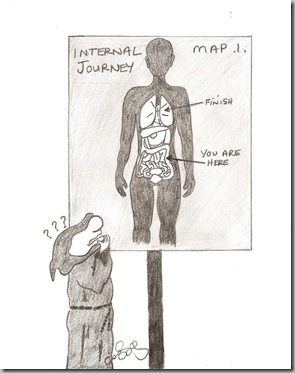
Even though much of what is written above is directed towards conflicts between two people, several of the suggestions can be applied to that internal conflict that I mentioned earlier.  I actually feel that most of my conflicts begin internally (a struggle with acceptance) and escalate to a conflict with my wife.

"If you have learned how to disagree without being disagreeable, then you have discovered the secret of getting along."  Bernard Meltzer, American Law Professor
 
How about you?  Do you experience these internal conflicts?  Do they occasionally rise to the surface and become a conflict between you and your wife (or significant other)?

Chrystle Fiedler writes about health topics for many national publications.  For more information on the Virtual Tranquilizer, visit www.conflictunraveled.com.