The other day I received an email from a man with Kennedy’s Disease. He was wondering:
- What is CPK?
- Why his CPK count was so high?
- What can he do about it?
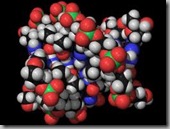
CPK or (CK) is Creatine Phosphokinase (a muscle enzyme). An elevated CPK count is quite normal for those of us with Kennedy's Disease. The higher number reflects muscle damage (or wasting). Those of us with Kennedy’s Disease can have CPK counts into the thousands.
Normally, our body does a great job of cleaning up the residue from normal muscle usage. However, as Kennedy's Disease progresses, the amount of waste generated from the muscle breaking down accelerates and the body can no longer remove all the waste.
For example, prior to being diagnosed with Kennedy’s Disease, my doctor was concerned that I was experiencing acute renal failure because my count was so high.
A key point for those of us with Kennedy’s Disease is that a high CPK will also indicate a longer than normal time needed to recover from excessive muscle usage. Those of us with Kennedy’s Disease have experienced this problem when we have ‘over-done’ something. Occasionally it might take a day or two to recover.
Understand that when the test is given is also important. If you have done something physically demanding within the last 24 hours, an elevated CPK is normal. If you had rested a day before the test, the count might still be elevated, but not nearly as high.
What can you do?
- Recognize that this is a part of the progression process.
- Consult with your neurologist. He/she is the most prepared to address your concerns and discuss options.
- Understand what particular work or play is causing an increased breakdown in the muscles.
Example: I was experiencing very high CPK counts when I was still very active (climbing mountains, lifting weights, running, biking, etc.) . As I began to exercise 'smarter', my CPK count gradually declined to a level that is still slightly elevated, but closer to normal. I now exercise every day, but my exercise program is different (less demanding). I also ‘listen to my body’.
I found the following articles interesting and hope it is helpful in better explaining what CPK (or CK) is.
Creatine Phosphokinase
- CPK's normal function is the transformation of creatine acid into phosphate, which is a usable source of energy for muscle, heart, and brain cells.
Concentration
- The normal concentration of CPK in the blood of a healthy adult is 22 to 198 units per liter. An unusually high concentration of CPK may indicate an injury or illness.
Damage
- When an organ or muscle containing CPK is damaged, the bloodstream floods with the "spilled" enzyme. Analyzing CPK levels through a blood test enables doctors to find out exactly what kind of CPK it is, thus revealing where the damage lies.
By: Terry Bytheway
Creatine kinase, also known as phosphocreatine kinase or creatine phosphokinase, is an enzyme or type of protein that is found in several tissue types of the human body, including the muscle and the brain. The function of this enzyme is to catalyze the conversion of creatine to phosphocreatine by applying itself in the consumption of adenosine triphosphate, the generation of adenosine diphosphate, and the reverse reaction. Adenosine triphosphate is a vital source of energy in biochemical reactions; in the skeletal muscle, the brain, and the smooth muscle – or all tissues that swiftly use up adenosine triphosphate – phosphocreatine acts as an energy reservoir for the quick regeneration of adenosine triphosphate. This is a very important function, and even though it doesn’t sound like much, creatine kinase definitely has its work cut out.
Going back to basics, there are three types of creatine kinase or isoenzymes in the body: CK-BB is mainly produced by the brain and the smooth muscle; CK-MB is primarily produced by the heart muscle; and most of CK-MM is produced by the skeletal muscle.
In normal conditions, there is very little creatine kinase circulating in the blood of the average, healthy human being. Taking the creatine test is a good idea to find out where exactly it is that one stands when it comes to the prevalent level of creatine kinase in one’s body. The test specifically measures the blood levels of certain muscle and brain enzyme proteins; the normal results for females range between 10 - 79 units per liter (U/L) and 17 - 148 U/L in males. A lower than normally low level of creatine kinase shows that you have been drinking excessively; alcohol liver
disease and rheumatoid arthritis are two of the most common possibilities that exist with respect to lowered levels of creatine kinase.
On the other hand, if the test reveals that the level of creatine kinase circulating in the blood is higher than it should be in normal conditions, then chances are that the human body in question has suffered damage either to the muscle or the brain. In fact, astronomical levels of creatine kinase are indicative of injuries, rhabdodomyolysis, myocardial infarction, myocarditis, myositis, malignant hypethermia, McLeod syndrome, neuroleptic malignant syndrome, and hypothyroidism. If most of this sounds like gibberish to you, just remember that a heart attack, a muscle disease or a stroke may result in abnormally raised creatine kinase levels in the blood. Statin medications used to decrease serum cholesterol levels may also be the culprit.
Experts suggest that anyone who is not sure whether or not they have had a heart attack (which is hard to imagine!) or whether muscles in their bodies have been damaged as a result of any sort of activity, should make it a point to go for a creatine kinase test.


